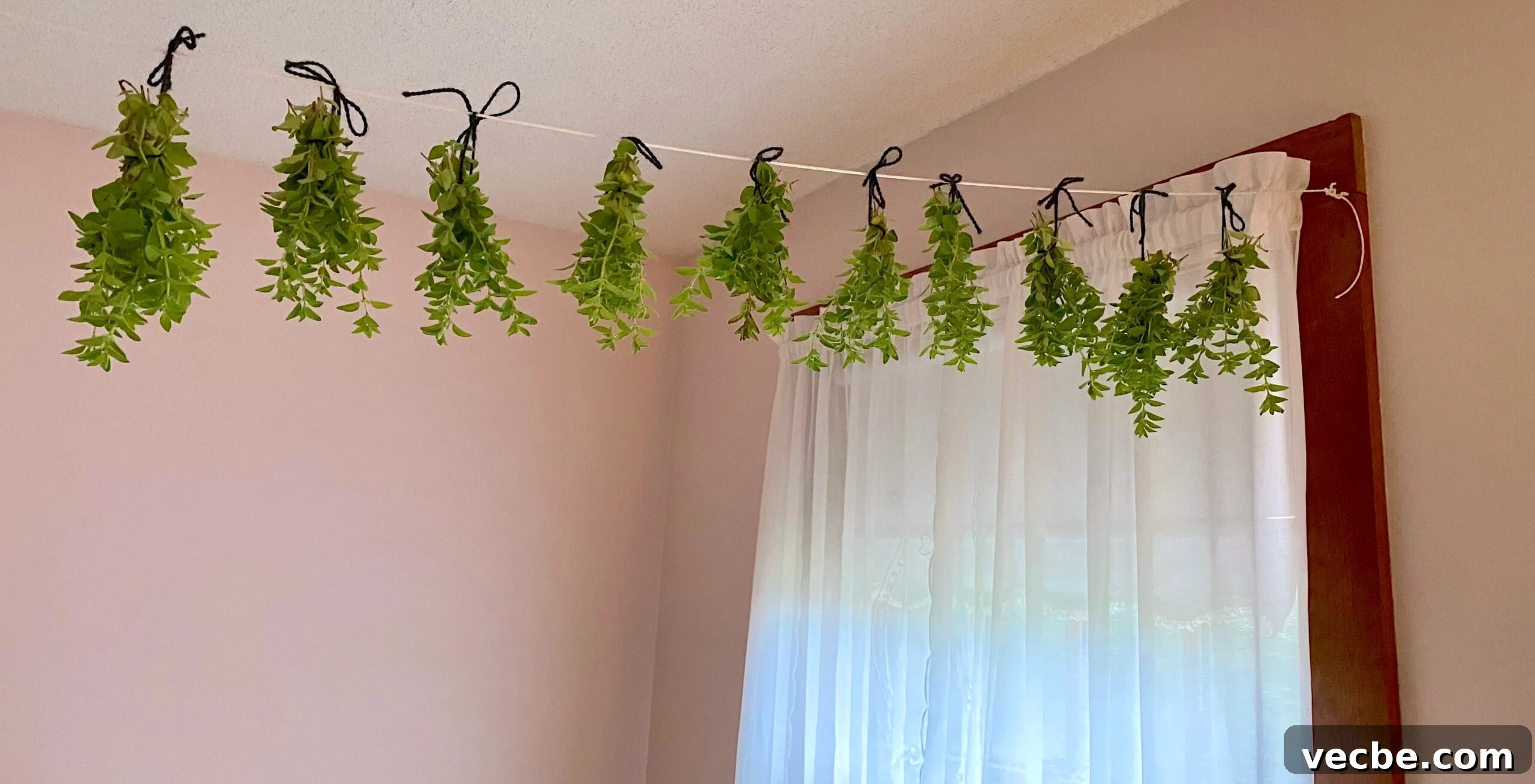
Early June is a great time to harvest and dry overwintered oregano, thyme and other hardy perennial herbs. Harvesting now captures the plants’ fresh flavors before summer growth dilutes essential oils.
Two Methods for Air Drying Herbs
LINE DRYING
LAYING ON A SCREEN
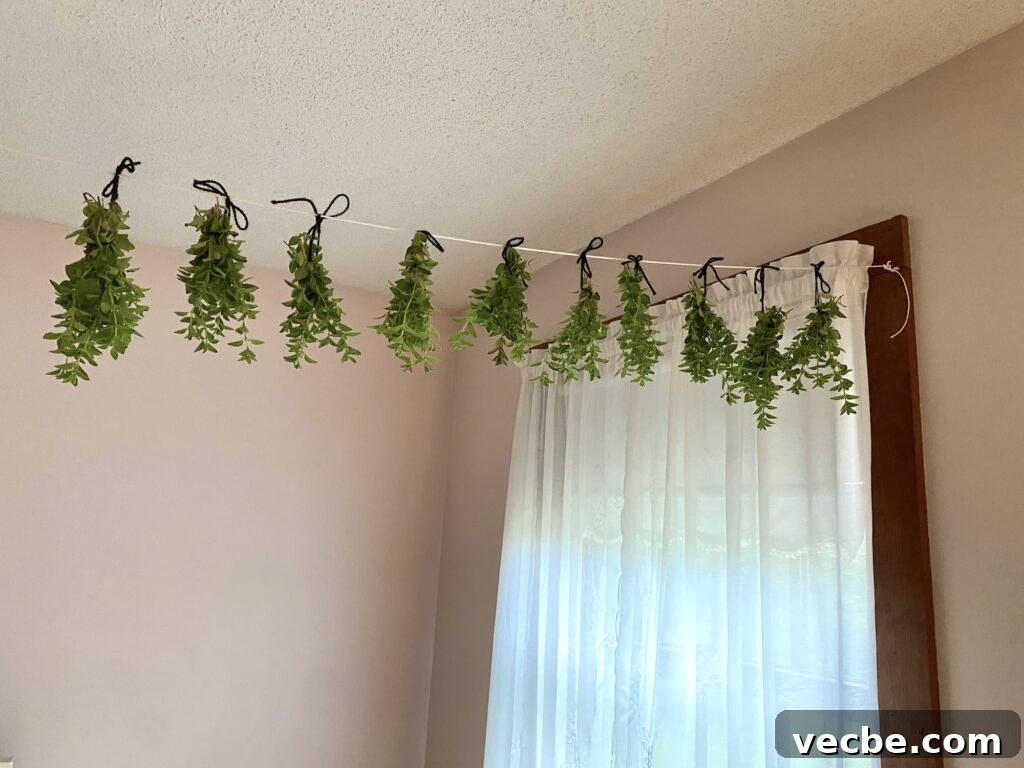
Line drying is one of the simplest and most effective ways to preserve oregano, thyme and many other aromatic herbs. To get the best flavor, harvest stems in the morning after any dew has dried but before the heat of the day. Select healthy, unwilted shoots and remove any damaged leaves.
Group stems into small bundles—about 8–12 stems for woody herbs like thyme, and slightly larger for oregano—secure them with cotton twine or a loose rubber band, and hang bundles upside down in a warm, dry, well-ventilated place out of direct sunlight. Direct sun can bleach color and reduce volatile oils, so aim for a shaded, airy spot such as an attic with good airflow, a covered porch, or a dry closet with the door propped open.
Drying time varies with humidity and herb thickness; expect anywhere from several days to two weeks. Check bundles periodically for mold or overly damp stems. When the leaves crumble between your fingers and the stems snap easily, the herbs are fully dry and ready to be stripped and stored.
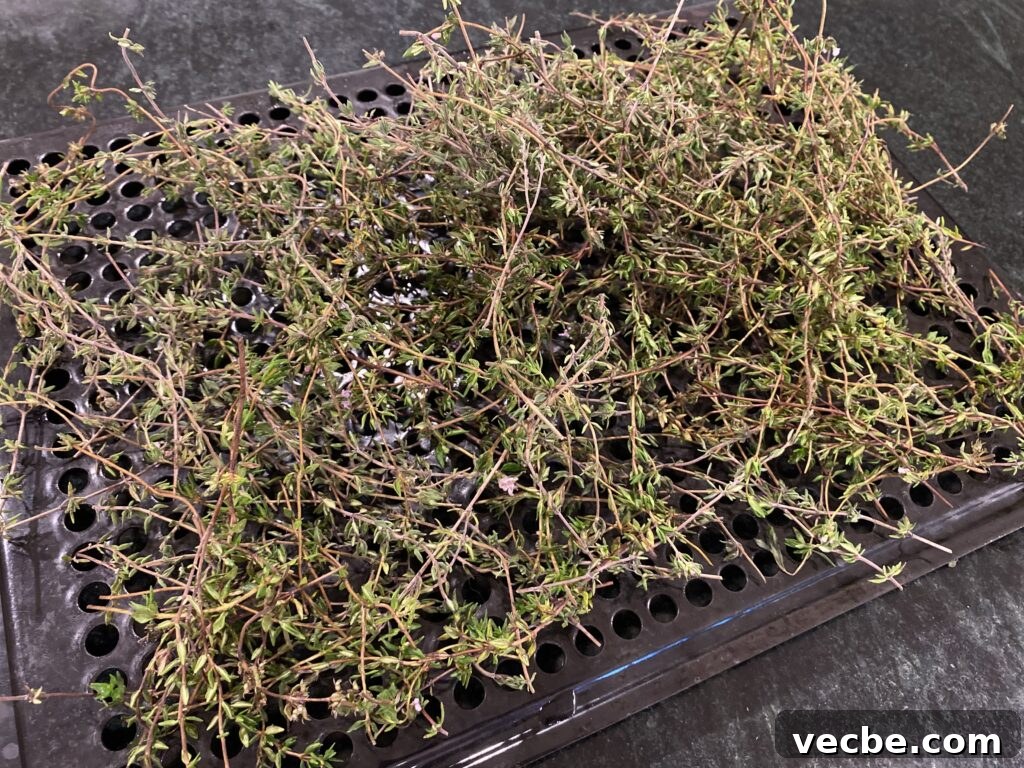
Laying herbs flat on a screen or perforated pan is another excellent option, especially for herbs with softer leaves or when you prefer not to tie bundles. Use a clean wire cooling rack, fine-mesh screen, or a perforated grill pan so air can circulate under and around the herbs. Arrange stems in a single layer without overcrowding to ensure even drying.
Place the rack in a warm, dry location with good airflow. Avoid stacking pans; a single shallow layer dries fastest and most evenly. Check daily and gently turn or shake the leaves to move any trapped moisture and help the underside dry. This method is particularly useful for thyme sprigs and smaller leaf varieties that dry quickly and don’t need the support of bundles.
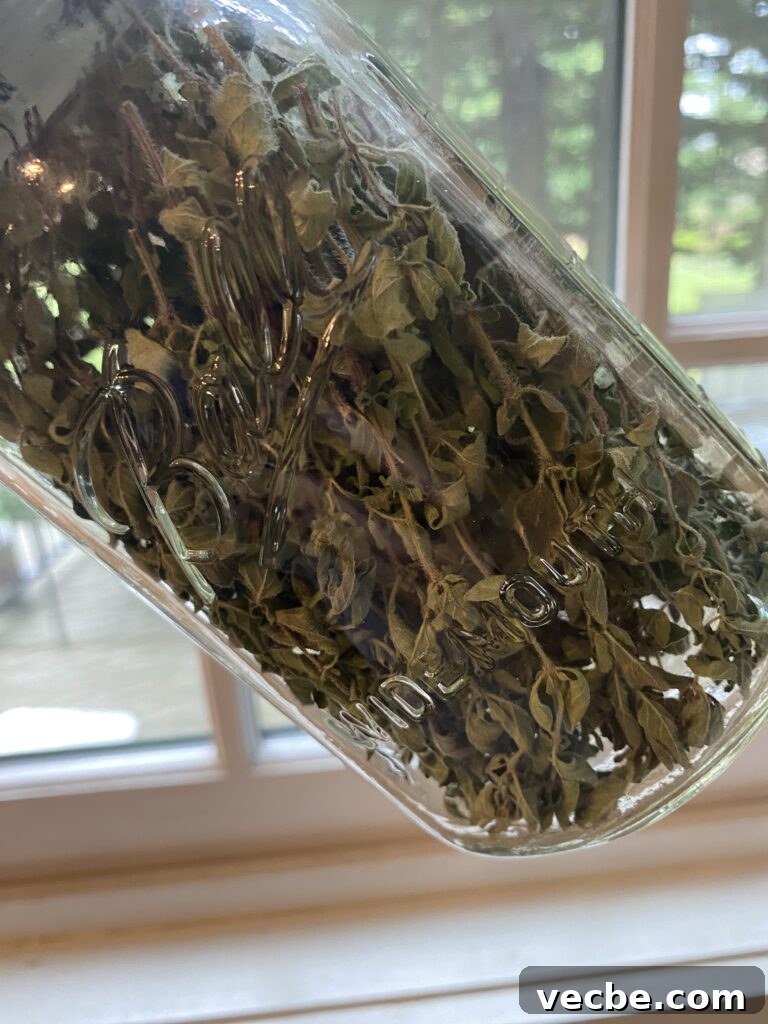
Dried Oregano
Once herbs are dry, remove the leaves from stems by pinching them between your fingers or rubbing the stems gently. For thyme, you can strip leaves by holding the top of the stem and running your fingers downward. For oregano, a light crush preserves essential oils and releases aroma.
Store dried herbs in airtight containers away from light and heat to preserve flavor. Small glass jars with tight lids work well—fill the jar and label it with the herb name and the date. Kept in a cool, dark pantry, properly dried herbs retain good flavor for six months to a year, though potency slowly declines with time. For best results, use dried oregano and thyme within 6–12 months.
A few practical tips to improve your results:
- Harvest before the plant flowers for the most concentrated flavor.
- Avoid washing herbs before drying—any retained moisture slows drying and increases mold risk. If you must wash them, dry thoroughly with a salad spinner and pat with paper towels before arranging to dry.
- Monitor humidity; if your area is very humid, consider using a dehydrator or an oven at the lowest setting for a short time.
- Label jars with the harvest date and rotate older jars to the front so you use the oldest stock first.
Air drying oregano and thyme is low-cost and simple, producing intensely flavored dried herbs ideal for cooking, teas, and herbal blends. With a little attention to harvest timing, airflow and storage, you can preserve your garden’s best flavors and enjoy them year-round.