
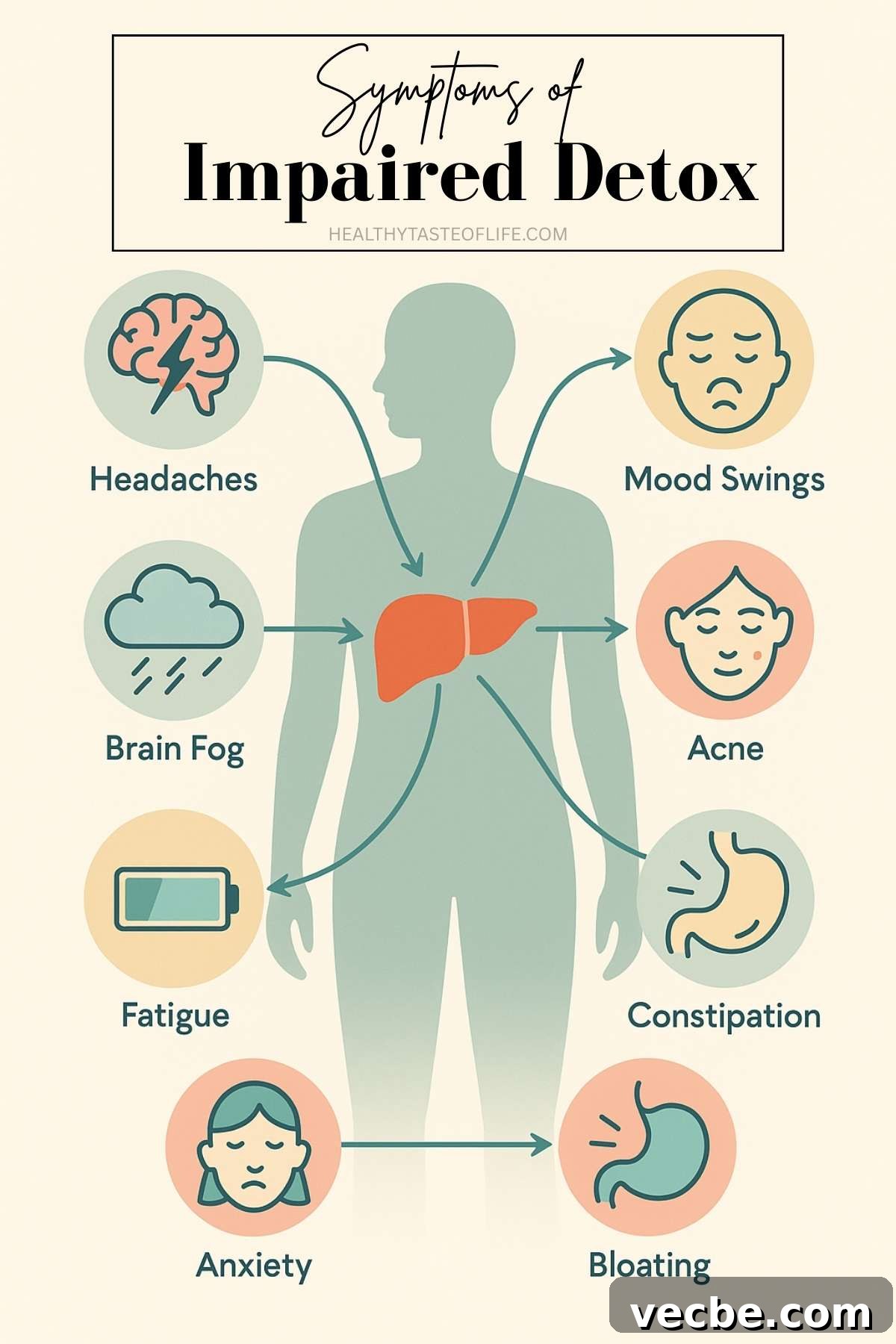
When the liver, kidneys, gut, lungs, skin and lymph are overloaded by daily exposures — environmental chemicals, excess hormones, processed foods and metabolic waste — your body sends subtle signals long before routine lab tests pick up a problem. Recognizing those early cues gives you a chance to support your detox pathways and prevent minor imbalances from becoming chronic issues.

As an Integrative Nutrition Health Coach, I learned from functional medicine clinicians who treat the body as an intelligent, interconnected system. That perspective helped me see how seemingly separate symptoms—skin issues, fatigue, mood shifts—often fit into one coherent pattern.
At first I noticed clear red flags: afternoon energy crashes, stubborn breakouts, eczema flares, unpredictable bloating, sweet cravings and occasional constipation. Then, by tracking symptoms, I started to notice quieter signals: irritability around strong scents, waking at 3 a.m., a vague “blah” feeling on stressful days, trouble focusing and shallow breathing tied to anxiety. Connecting those dots allowed small, consistent lifestyle changes to make a big difference.
Below are 15 body-and-mind signals I watch for with clients, with likely root causes and gentle, research-backed interventions you can try. At the end is a printable 14‑day detox plan that outlines actionable steps and trackers.
Jump to The Guide
Why Detox Pathways Matter
Functional medicine treats detox organs as a team. If one route becomes congested, toxins can recirculate, inflammation increases, hormones misfire and mood and energy suffer.
- Constant exposure: We face air pollutants, pesticides, microplastics, processed foods and stress metabolites daily.
- Five exit routes: Liver & bile, kidneys & urine, gut & stool, lungs & breath, skin & sweat.
- Blockage risk: When any route stalls, vague fatigue, brain fog and mood changes often appear before labs change.
How the Body Detoxes
Detox works like a three-shift cleanup crew:
- Phase I (Activation): Liver enzymes transform fat-soluble toxins into more reactive forms so they can be processed further. For example, alcohol is converted to acetaldehyde in this stage.
- Phase II (Conjugation): Nutrients such as glutathione, B‑vitamins and sulfur-containing amino acids attach water-friendly groups to toxins, making them safe for elimination.
- Phase III (Elimination): Conjugated toxins are excreted via bile and stool, urine, breath and sweat. Fiber, hydration and steady bile flow keep elimination moving.
Key takeaway: Support every phase: reduce toxic load, supply nutrients for conjugation, and keep elimination pathways moving with fiber, water and movement.

Hidden Physical Clues Your Filter System Is Overworked
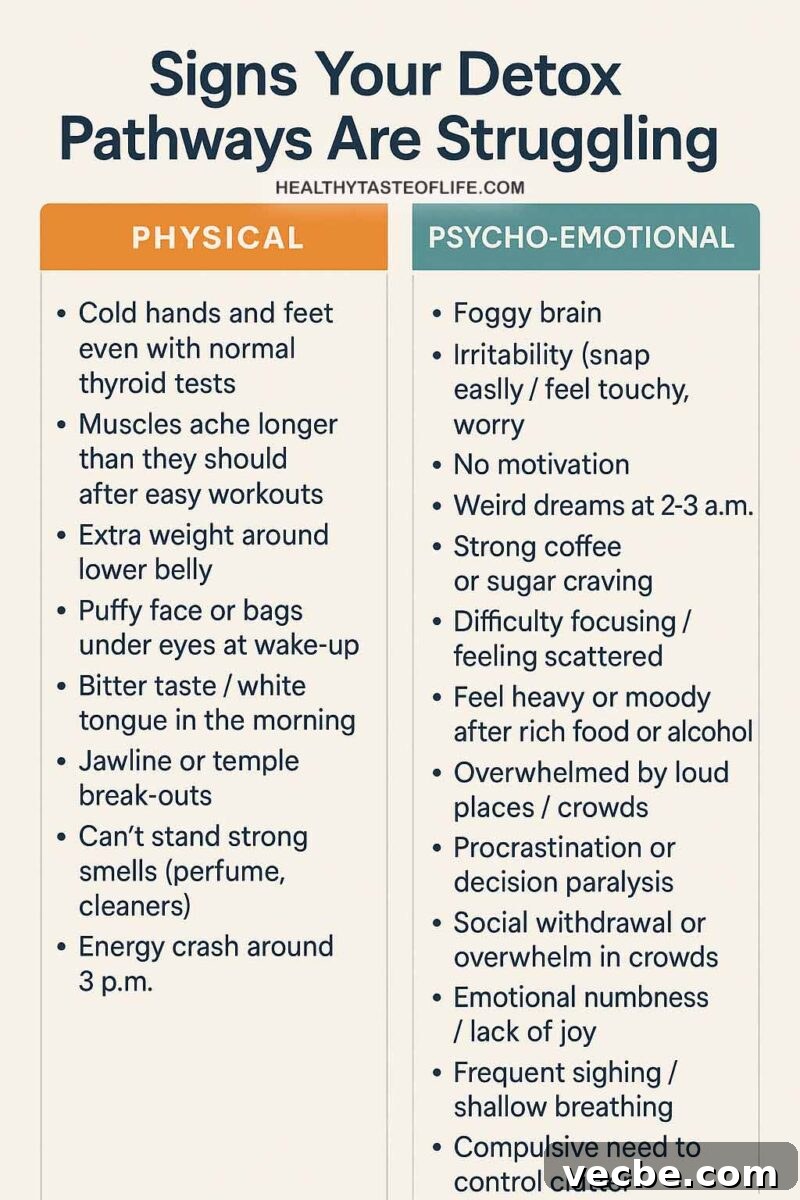
These are eight common physical signs I see repeatedly. Each entry explains what you might notice, why it happens and a simple tweak to help.
| What You Feel | Why It Happens | Simple Fix That Works |
|---|---|---|
| Energy crash around 3 p.m. | Blood sugar swings and depletion of B‑vitamins used earlier in the day. | Choose an apple with almond butter or a protein-rich snack instead of sweets. |
| Can’t stand strong smells | Detox organs—especially the liver—are already taxed and extra fumes feel overwhelming. | Increase ventilation and switch to fragrance-free personal-care and cleaning products. |
| Jawline or temple breakouts | Hormone byproducts and gut imbalance can push waste out through the skin. | Support gut health, include sulfur-rich foods like garlic, and ensure regular bowel movements. |
| Bitter taste or white tongue in the morning | Sluggish bile flow and overnight oral bacterial buildup. | Stay hydrated, try warm water with lemon during the day, tongue‑scrape and consider bitter herbal teas in the evening. |
| Puffy face or bags under eyes at wake-up | Lymphatic sluggishness overnight, often worsened by salty meals or slow liver function. | Try a brief face massage, drink a large glass of water on waking and limit high-sodium late meals. |
| Extra weight around lower belly | Toxins can be stored in fat cells; excess estrogen or slow elimination can contribute. | Increase fiber to 30–40 g daily from vegetables, flax and chia to support binding and removal. |
| Muscles ache longer after easy workouts | Oxidative stress and metabolic byproducts slow repair. | Soak in an Epsom-salt bath or use gentle antioxidant support and prioritize rest. |
| Cold hands and feet despite normal thyroid tests | Reduced peripheral circulation when toxin load is high. | Dry-brush skin, take short walks to boost circulation and try contrast showers when appropriate. |
Tip: Notice patterns. Two or more clues together suggest your detox team is straining; three or more calls for more focused support.
Hidden Psycho‑Emotional Symptoms
Emotional and cognitive signals often accompany physical overload. I’ve experienced many of these myself and see them frequently with clients.
| What You Notice | Why It Might Happen | Real-Life Example & Quick Help |
|---|---|---|
| Foggy brain or losing words | Neuroinflammation or slow clearance of waste chemicals from the nervous system. | Pause for five deep breaths and add a serving of leafy greens at lunch for the week. |
| Irritability / snapping easily | Gut microbial imbalance affecting neurotransmitters. | Step outside for fresh air when scent triggers occur; consider probiotic support long term. |
| Waves of worry | Blood sugar dips or stress hormones spike as detox slows. | Combine carbohydrates with protein at breakfast and practice an exhale-focused breathing drill when anxiety rises. |
| No motivation (“blah” days) | Low cellular energy from mitochondrial stress and depleted B‑vitamins. | Short sun exposure and repleting B‑vitamins often lift energy. |
| Weird dreams at 2 a.m. | The liver’s peak work hours include late night; a backlog can disturb sleep. | Consider magnesium before bed and consistent sleep timing. |
| Strong coffee or sugar cravings | Adrenal demand for quick energy when cells are tired. | Swap pastries for fruit with nut butter and include chromium-rich vegetables like broccoli. |
| Difficulty focusing / feeling scattered | Histamine or neurotransmitter imbalance. | Include DAO-supporting foods such as microgreens and practice brief grounding breaks. |
| Moodiness after rich food or alcohol | Slow bile flow allows fats and toxins to recirculate. | Start meals with bitter greens to stimulate bile. |
| Overwhelm in crowds or loud places | Accumulated stress chemicals and nervous system overload. | Grounding exercises and short breaks outdoors help reset the system. |
| Procrastination or decision paralysis | Frontal-lobe fatigue from oxidative stress. | A 10-minute walk outside often restores clarity. |
| Emotional numbness / lack of joy | Dopamine depletion linked to metabolic stress and glycation. | Brief daily sunlight exposure supports serotonin and mood. |
| Frequent sighing / shallow breathing | CO₂ retention and subtle lymph congestion. | Diaphragmatic breathing helps clear the chest and supports relaxation. |
| Compulsive need to control clutter | A subconscious effort to reduce sensory input and perceived toxins. | Daily mindfulness and short body scans break the loop. |
| Heightened startle reflex | Magnesium shortfall and adrenal hypervigilance. | Consider magnesium repletion and stress-reduction techniques. |
Tip: If two or more of these psycho-emotional symptoms persist for a week or more, give your detox pathways extra attention.
Top Triggers That Clog Detox Pathways
- Ultra-processed foods: Seed oils, refined sugar and additives force the liver to process artificial ingredients while inflaming the gut lining, allowing more toxins in.
- Chronic constipation: Less than one complete bowel movement daily allows re‑absorption of toxins back into circulation, increasing the liver’s workload.
- High stress & poor sleep: Elevated cortisol and disrupted sleep restrict bile flow and impair nightly repair.
- Nutrient gaps: Shortages of magnesium, B‑vitamins and sulfur amino acids hinder detox enzymes from completing their work.
- Environmental load: Volatile organic compounds, mold, pesticides and microplastics add constant chemical burden.
- Genetic variations (such as slower-processing SNPs): Certain gene variants can make detox processes less efficient, increasing your need for supportive nutrients.
When to Seek Professional Support
- Symptoms persist for more than three months despite sensible lifestyle changes.
- New rashes, jaundice or dark urine appear.
- Rapid weight change, severe fatigue or mood swings impair daily life.
- A history of significant chemical exposure, mold or heavy metals.
Pro tip: Functional medicine testing can identify specific bottlenecks and guide targeted support when basic changes don’t resolve symptoms.
Fast Ways to Unburden Your Detox System
- Hydrate + minerals: Aim for steady water intake and consider a pinch of unrefined sea salt or a mineral concentrate if you tolerate it.
- Balanced plate daily: Protein, healthy fats, fiber and vegetables steady blood sugar, curb cravings and supply nutrients for detox.
- Support the gut lining: Include soothing foods like bone broth, cooked apples and aloe where appropriate and focus on gentle gut-healing strategies.
- Fiber target: 30–40 g per day from vegetables, flax and chia to bind bile-borne toxins.
- Cruciferous boost: Regular intake of broccoli, kale or broccoli sprouts supports sulforaphane pathways.
- Sweat and breathe: Regular vigorous movement, saunas or hot baths promote sweat-based elimination.
- Prioritize sleep: Aim for 7–9 hours and consistent bedtimes to align nightly detox rhythms.
- Gentle binders: In some cases, temporary use of binders like charcoal, clay or pectin under guidance can help if toxins are recirculating.
FAQs
Many rely on laxative effects and may provide short-term relief but do not supply the nutrients needed for Phase II detoxification.
Focus on gentle strategies—hydration, fiber and nutrient-dense foods. Avoid aggressive protocols and consult your healthcare provider.
Subtle changes in energy and digestion can appear within 2–4 weeks of consistent, gentle support, though results vary by individual.
Key Takeaways
- Physical and emotional symptoms can signal detox overload — pay attention to your inner data.
- Recognizing signals early allows you to act before lab tests change.
- Support involves five simple steps: reduce input, nourish pathways, move lymph, optimize elimination and rest.
- Small, consistent changes outperform dramatic cleanses. Patience and steady habits win.
If a printable plan would help, consider a concise 14‑day guide that lays out daily actions, trackers and checklists for practical implementation.
Download The 14 Day Detox Plan (PDF)


14 Day Detox Plan / Guide (PDF)
Instructions
-
To access the printable guide, search for the titled PDF or use a trusted source you follow for wellness resources.


Share your experience with the author or community tags and leave feedback to help other readers.
Nutritional estimates and guidance in this article are general in nature and may not apply to everyone.
Disclaimer: The content on this page is for informational purposes only and is not intended as medical advice or a diagnosis. Consult your healthcare provider for personal medical concerns and before starting any aggressive detox protocol.
© HealthyTasteOfLife. Content and images are copyright‑protected and require permission for reuse. Sharing a link to this content is encouraged and appreciated.