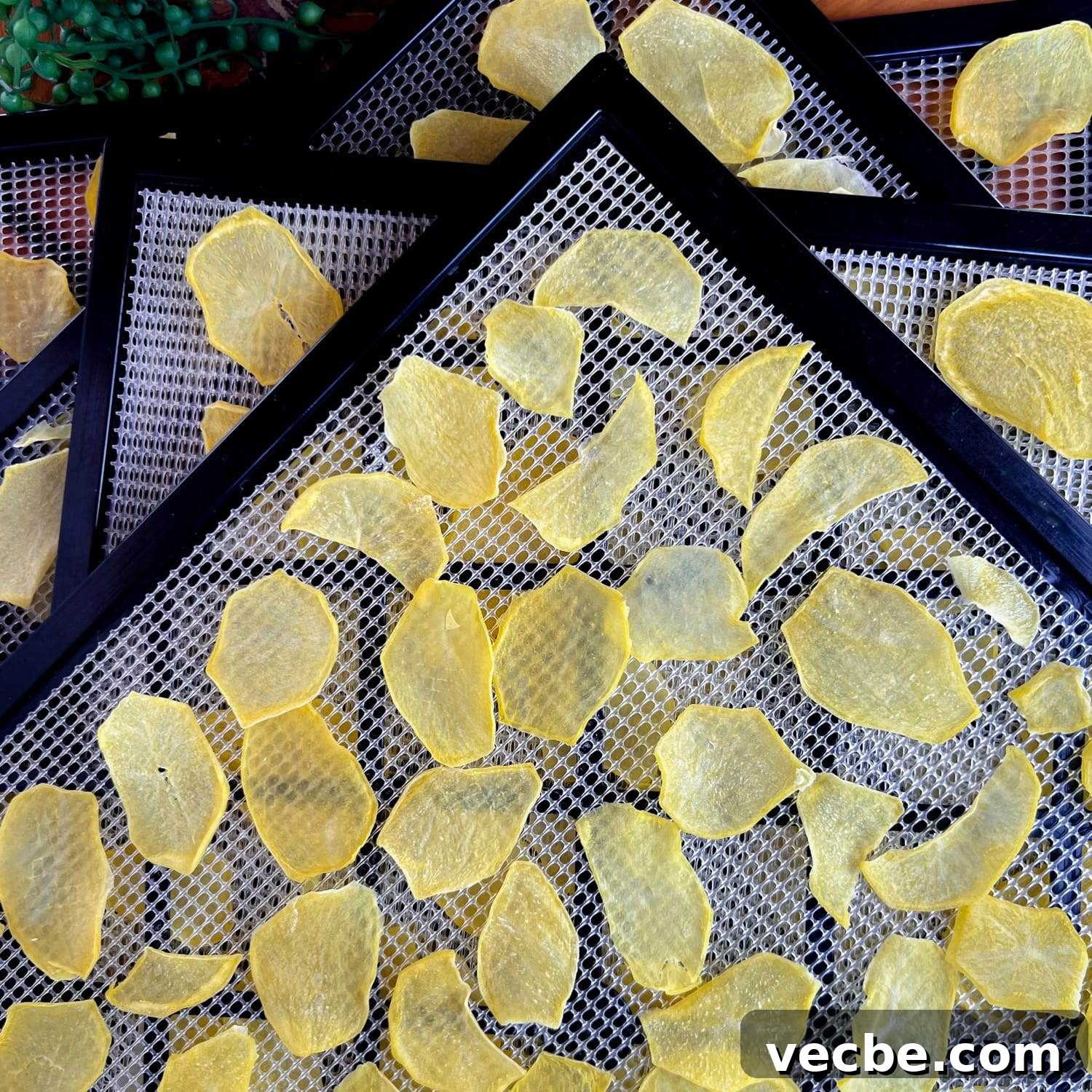
Learn how to dehydrate potatoes with clear, step-by-step instructions and photos illustrating the process.

Why Dehydrate Potatoes?
Dehydrating potatoes is a practical way to preserve a harvest or make convenient, compact meal ingredients. Two common reasons to dehydrate:
1. Lack of Proper Storage Space
Potatoes store best in a cool, dark, dry place such as a root cellar. In modern homes without that ideal environment, potatoes often sprout or spoil quickly. Refrigeration is not recommended because cold temps can cause dark spots and an off-sweet flavor. If you have more potatoes than you can store properly, dehydrating them prevents waste and extends their shelf life.
2. Convenient Pre-Made Meals
Dried potatoes are lightweight and ready to use for camping, travel, or quick weeknight meals. They rehydrate fast and work well in soups, stews, casseroles, scalloped or au gratin dishes, and as pan-fried hashbrowns.

Best Types of Potatoes for Dehydrating
Most varieties can be dehydrated, but waxy or all-purpose types like Yukon Gold, white, and red potatoes yield the best sliced results. Very starchy varieties such as Russets can be crumbly after blanching and are harder to slice evenly.
Can You Dehydrate Raw Potatoes?
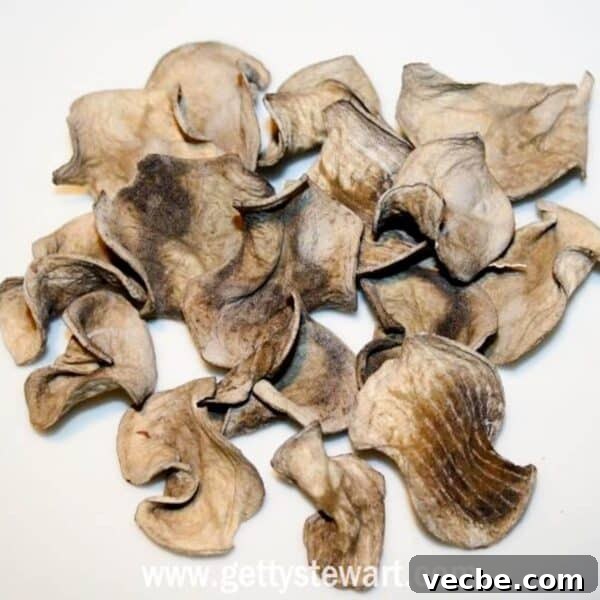
No — do not dehydrate raw, unblanched potatoes. Raw slices oxidize and discolor badly as they dry. Always blanch or par-boil before dehydrating to preserve color, texture, and flavor.
How to Dehydrate Potatoes
Step 1: Wash & Trim
Scrub potatoes well and remove any blemishes or green areas (green parts are not edible). Peeling is optional — potatoes dehydrate well with or without the skin. Keep cut potatoes submerged in water while you work to prevent oxidation.
Step 2: Slice Evenly
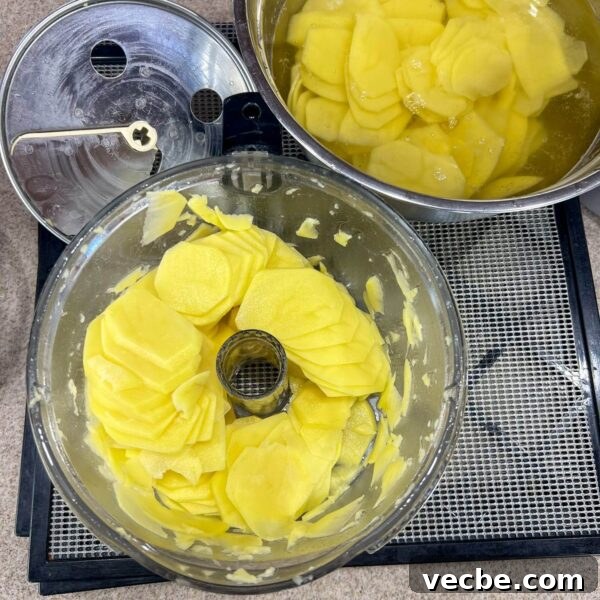
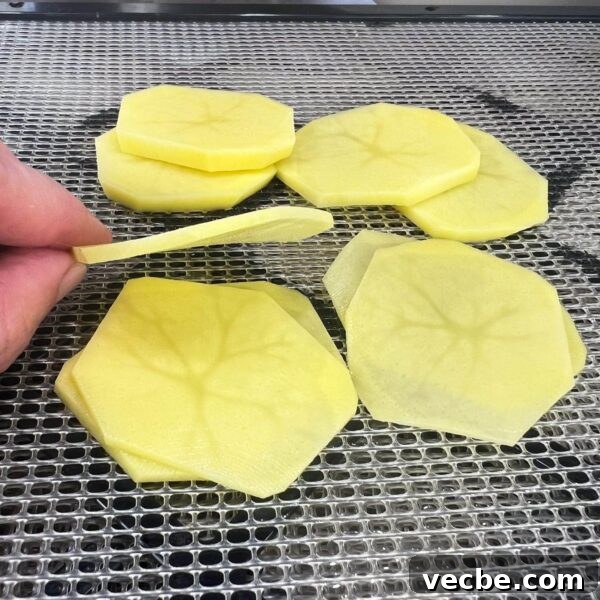
Slice potatoes to a consistent thickness of about 1/8 to 1/4 inch (3–6 mm). A food processor, mandolin, or sharp knife works well. Consistent thickness ensures even drying. You can also shred potatoes using a coarse grater if you prefer dehydrated hashbrowns.
Step 3: Blanch
Blanching is essential
Bring a large pot of water to a boil (no salt). Add potato slices or shredded potatoes in batches so the water returns to a boil quickly. Cook until fork tender — about 4–6 minutes for slices, and only about 2 minutes for shredded potatoes. Fork tender means a fork inserts easily without the potato falling apart.
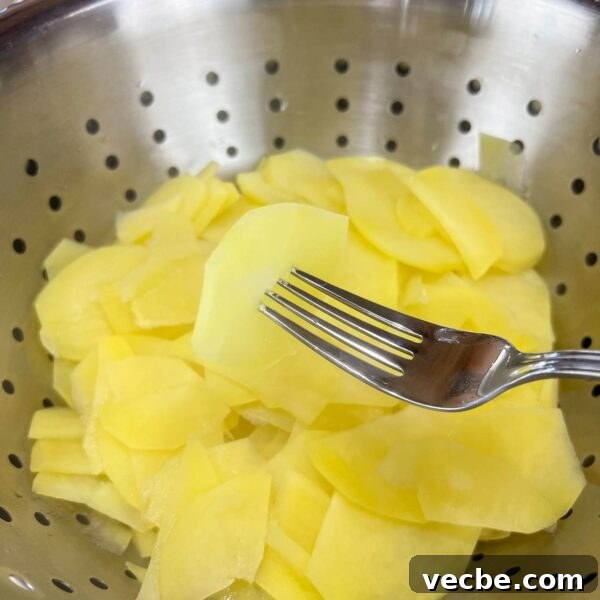
Do not skip blanching. Unblanched potatoes will dry to a dull grey or black and will be unappealing even though they are not dangerous to eat.

Step 4: Drain
Scoop the blanched potatoes out and drain thoroughly. Repeat until all potatoes are blanched and drained.
Step 5: Arrange on Dehydrator Trays
Spread slices on mesh dehydrator trays in a single layer without overlapping. Shredded potatoes can overlap slightly but will dry faster if stirred periodically.

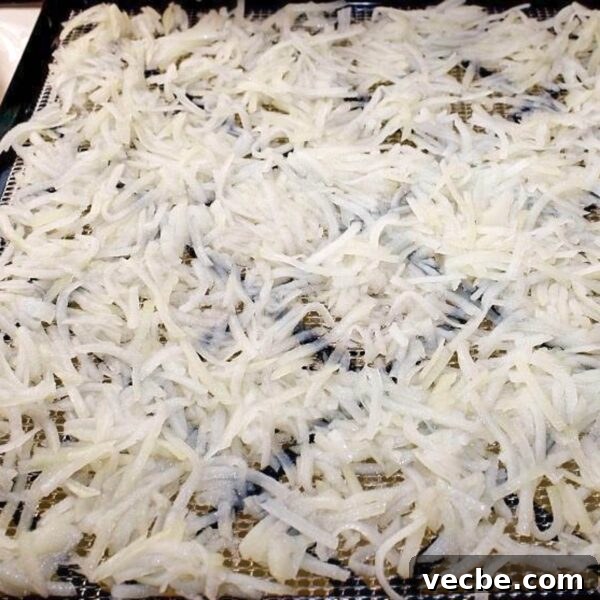
Step 6: Dehydrate
Dry at 135°F (58°C) for about 6–8 hours when the dehydrator is full. Thinner slices and shredded potatoes may finish sooner; rotate or remove trays as needed. In humid climates or with thick slices, drying time may be longer.
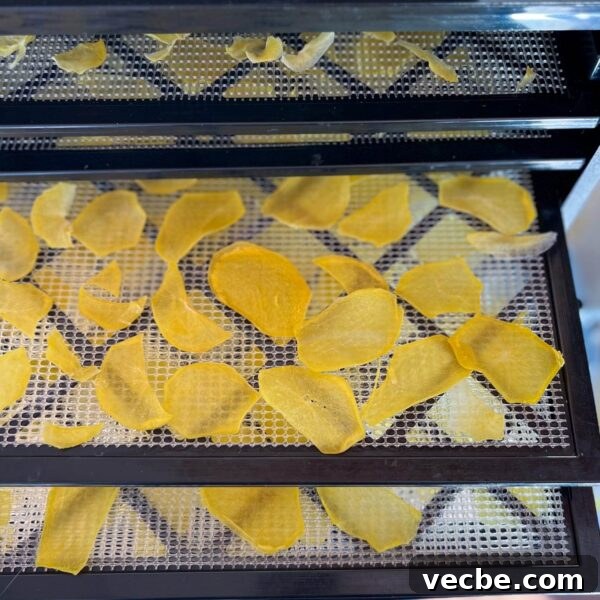
Step 7: Check for Dryness
Potatoes are done when they are translucent and crisp and snap cleanly. If they bend without breaking, continue drying. Properly dried slices should shatter like a crisp chip.
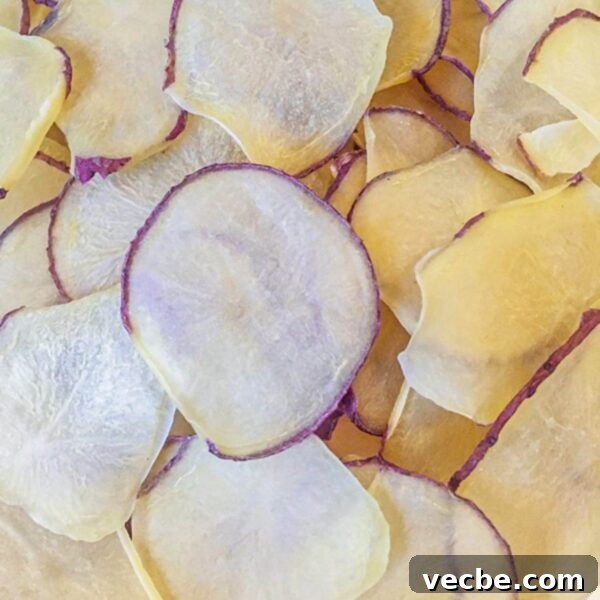
Step 8: Cool, Cure, and Store
Allow the dried potatoes to cool completely, ideally overnight. Store in an airtight container in a cool, dry, dark place where they won’t be crushed. For the first 7 days, check the container for any signs of moisture, condensation, or color change — an observation period called curing. If planning very long-term storage, consider vacuum sealing.
How to Rehydrate Dehydrated Potatoes
Rehydrate Potato Slices
- Place desired amount of slices in a bowl and cover with at least 1/2 inch of hot water.
- Soak 20–30 minutes or until soft and pliable.
- Drain excess water and pat dry before using in recipes.
Rehydrate Shredded Potatoes
- Cover shredded potatoes with hot water and soak 15–20 minutes or until soft.
- Drain thoroughly and squeeze out excess water.
- For pan-frying: heat a heavy skillet with oil and a bit of butter, spread the drained shreds in a single layer, season, and cook undisturbed 4–5 minutes until golden, then flip and cook 3–4 minutes more until crisp.
How to Use Dehydrated Potatoes
Dehydrated potatoes are versatile. They’re excellent in scalloped or au gratin dishes, soups, stews, casseroles, and skillet potatoes. For long-simmering dishes with plenty of liquid, you can add dried slices directly and allow extra cooking time to rehydrate them in the sauce or broth.

How Many Raw Potatoes to Dehydrate
You can dehydrate any amount, but since slicing and blanching take time, it’s efficient to fill your dehydrator. A 9-tray square dehydrator typically holds about 6–8 pounds of potatoes, which yields roughly 18–24 cups of dried slices. Depending on portion size, that can translate to approximately 35–40 servings; actual servings vary with slice thickness and serving size.
Recipe: How to Dehydrate Potatoes
Summary
Step-by-step instructions for dehydrating potatoes. Use Yukon Gold, white, or red potatoes and follow the blanching and drying steps for best color and texture.
Prep: 40 mins • Cook (Drying): 6 hrs • Total: 6 hrs 40 mins • Servings: about 20 cups
Author: Getty Stewart
Ingredients
- 6–8 lb potatoes (or any amount you choose)
Instructions
- Wash and scrub potatoes. Remove blemishes and any green areas. Peeling is optional.
- Keep raw potato pieces in water to prevent browning while you work.
- Slice evenly 1/8 to 1/4 inch (3–6 mm) thick using a food processor, mandolin, or knife.
- Bring a large pot of water to a boil. Add 3–4 cups of potato slices, return to a boil, and cook 4–6 minutes until fork tender. For shredded potatoes, blanch about 2 minutes.
- Remove and drain. Repeat until all potatoes are blanched and drained.
- Spread slices in a single layer on mesh dehydrator trays; shredded potatoes may overlap slightly but should be stirred if clumped.
- Dehydrate at 135°F (58°C) for 6–8 hours or longer if needed. Rotate trays or remove faster-drying trays as required.
- Check after 5–6 hours. Potatoes are done when translucent, crisp, and snap when broken.
- Cool completely (overnight is ideal). Store in airtight containers in a cool, dry, dark place. Use within one year for best quality; vacuum seal for longer storage.
Notes
To rehydrate: cover dried potatoes with boiling water and soak 10–20 minutes depending on thickness. Monitor the first week after storing for any moisture — this curing step helps ensure long-term quality.
Nutrition (approx. per serving)
Calories: 105 kcal • Carbohydrates: 24 g • Protein: 3 g • Fat: 0.1 g • Fiber: 3 g • Sodium: 8 mg
How will you use your dehydrated potatoes?
Note: This guide reflects updates made over several years of testing and experience with dehydrating potatoes.
Cook with the seasons. I’m a food educator and Professional Home Economist focused on helping you select, store, and serve seasonal ingredients in simple, delicious meals.