Healthy Pie Crust
Flaky, buttery pie crust made from almond flour, tapioca starch, white rice flour and potatoes. This easy, gluten-free, oil-free, dairy-free crust works for both sweet and savory pies.
Author: Lisa Kitahara
Total Time: 25 minutes
Yield: 1 pie crust
Pie season is nearly here, and this lighter pie crust finally delivers the flaky, tender texture I love—without butter, oil, eggs or wheat. The formula is simple and relies on four main ingredients that work together to create a pastry-like crumb and flaky layers:
- Almond flour
- Tapioca starch
- White rice flour
- Mashed potatoes
Using whipped mashed potato adds moisture and structure while yielding a light, almost shortbread-like flake after baking. Tapioca helps bind and create elasticity, almond flour brings richness and the white rice flour helps keep the color pale so the crust looks classic. The result is a forgiving, easy-to-make crust that performs well for both quick no-bake fillings and baked pies.
Ingredients
- 1 2/3 cup fine almond flour (about 186 g)
- 1/3 cup tapioca starch (about 42 g)
- 1/4 cup white rice flour (about 40 g)
- 1 tbsp cane or coconut sugar (15 g) — omit for savory pies
- 1/4 tsp salt (use 1/2 tsp for savory pies)
- 1/3 cup mashed white or russet potato (about 120 g, roughly 1 large steamed and mashed potato)
- 4–5 tbsp water (60–75 g), add more as needed
Step-by-Step: How to Make a Flaky Healthy Pie Crust
Accurate measurements give the best results. If possible, weigh ingredients with a kitchen scale.
- Combine almond flour, tapioca starch, white rice flour, salt and sugar (if using) in a large bowl and whisk to blend.
- Add the mashed potato and the smaller amount of water. Stir to combine, then use your hands to “mush” and knead the dough until it comes together. Add additional water, 1 tbsp at a time, only if needed. The right texture is moist and cohesive but not sticky.
- Place the dough between two sheets of parchment and roll into a 12–13 inch circle with a rolling pin.
- Remove the top parchment. Lift the dough by the remaining parchment and flip it into a 9-inch pie dish. Carefully peel off the paper.
- Gently press the dough into the corners and up the sides of the dish. Avoid stretching the dough to prevent tears.
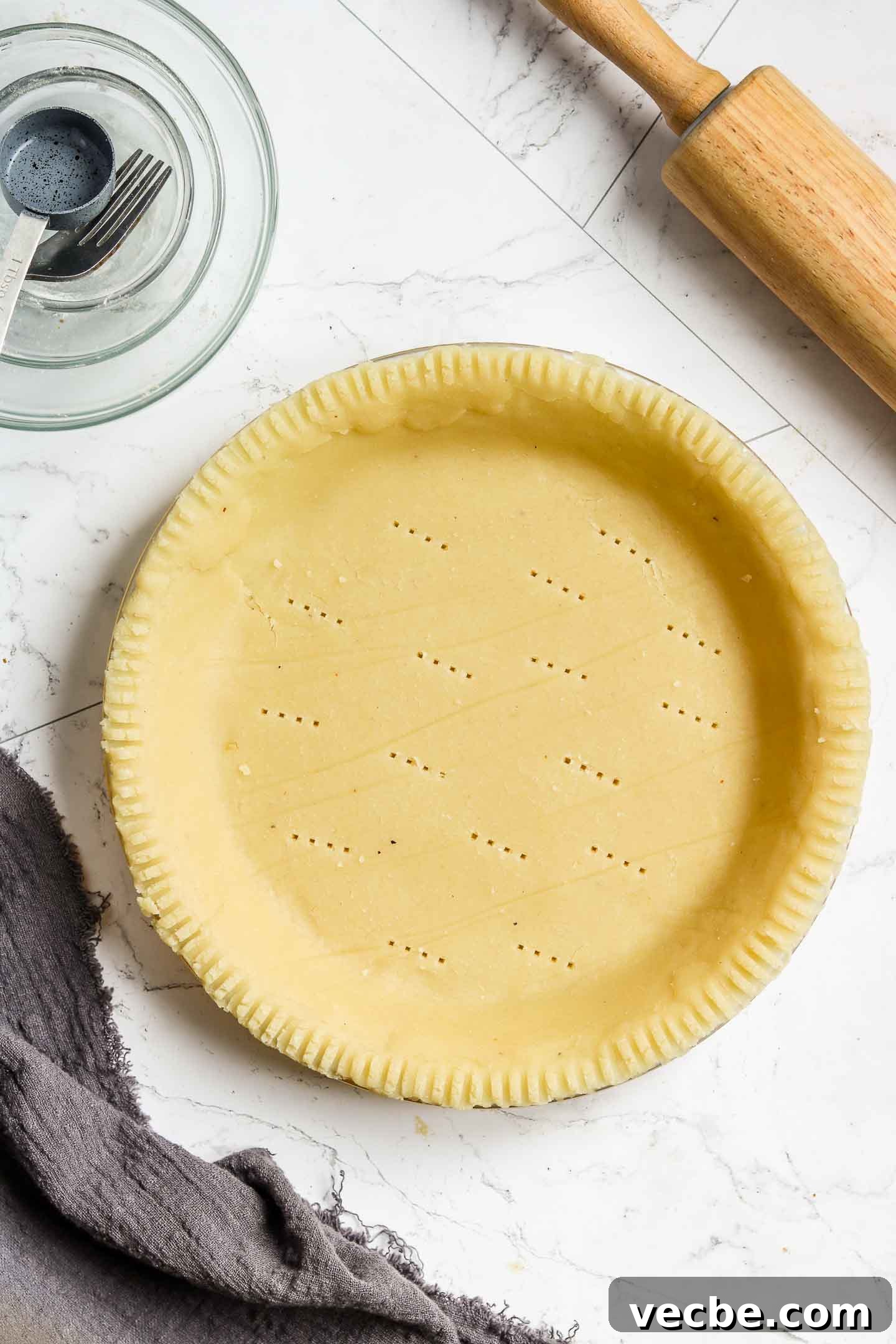
- Trim excess dough with a knife, then use the scraps to patch any cracks. Crimp the edge with fingers or press a fork for a simple finish. Prick the base with a fork before baking.
Tips & Troubleshooting
- Crust too dry or crumbly: Add a teaspoon or two of water and work the dough briefly. Dough can dry if rolled repeatedly.
- Crust too sticky: Fold in a little extra almond flour until it’s rollable. Humidity can affect moisture.
- Tears or cracks: Press scraps over tears and smooth with your fingers; the dough patches easily.
- Make ahead: Shape dough into a ball and refrigerate in an airtight container. Bring to room temperature before rolling to avoid crumbling. You can also bake the crust ahead with or without filling.
- Freeze: Wrap tightly and freeze. Thaw in the refrigerator overnight before use.
How to Use This Pie Crust
No-bake fillings: Bake at 350°F (175°C) for 25–28 minutes or until golden. Cool completely before adding filling.
Baked pies: Blind-bake (pre-bake) the crust for 5–10 minutes at 350°F. For pies that will bake for an hour, 5 minutes is usually sufficient; for pies with shorter bake times, blind-bake for up to 10 minutes. Then add filling and finish baking per your pie recipe.
This crust is versatile—try it with pumpkin, pecan, apple, blueberry, quiche, or savory pot pie fillings.
Why This Works
Mashed potato brings moisture and a delicate flake when baked. Tapioca creates a tender, slightly elastic texture while almond flour adds a rich, buttery mouthfeel. White rice flour lightens the color so the crust looks similar to traditional pastry. Together these ingredients produce a crust that’s easy to handle, forgiving to repair, and pleasantly flaky.
Notes
- Equipment: mixing bowl, rolling pin, parchment paper, 9-inch pie dish.
- Nutritional information: Any nutrition figures provided are estimates and will vary based on specific ingredients used.
Nutrition (Estimate)
Serving size: 1 whole pie crust. Calories and macronutrients will vary depending on ingredient brands and exact quantities; treat provided values as rough estimates.