Learn the safest way to remove burn marks from a glass stove top without scratching the surface. With simple household items—vinegar, dish soap, Bon Ami powder, and a little elbow grease—you can restore a glossy finish quickly.
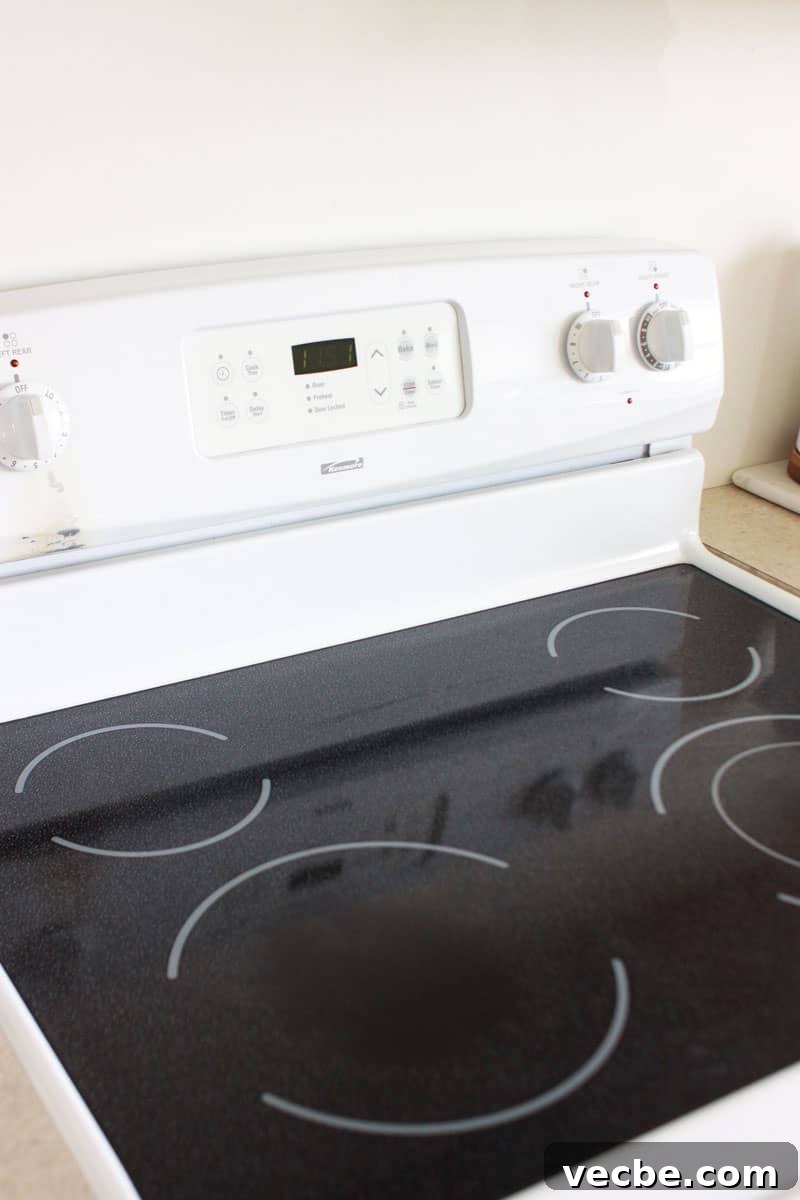
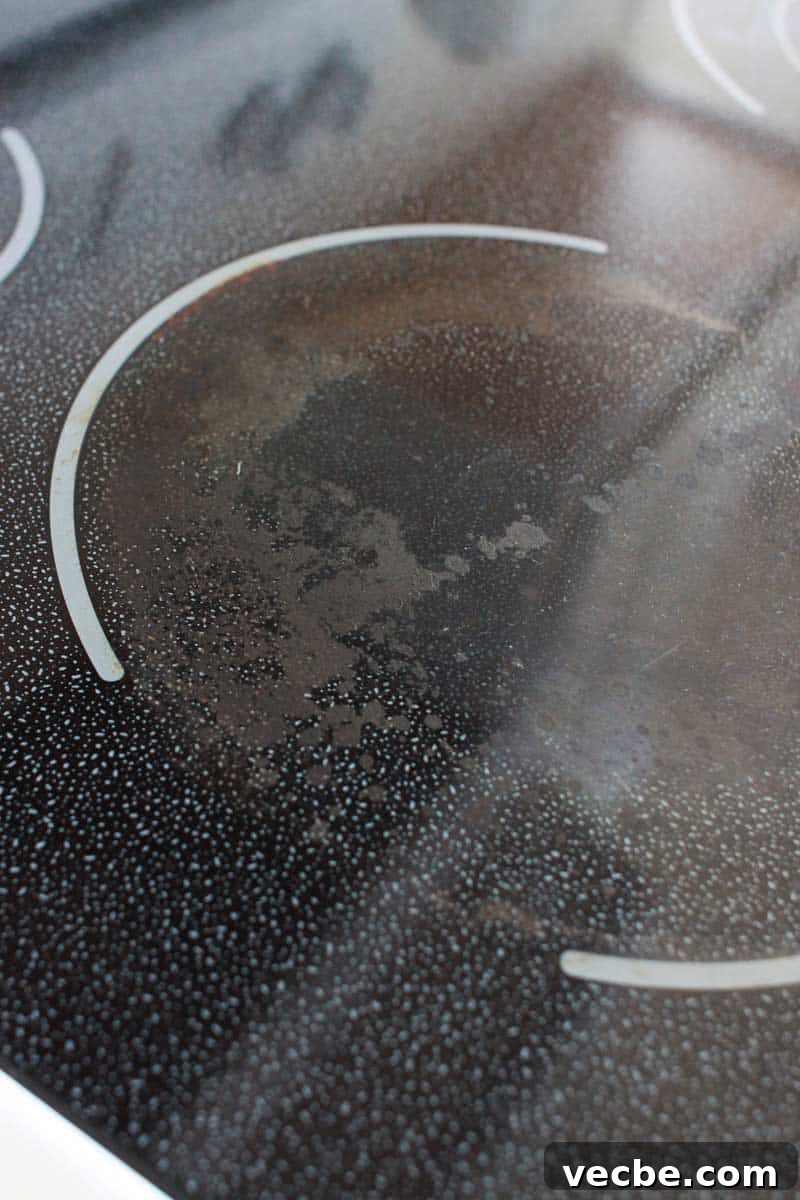
I’ll admit I’m a messy cook—having little ones help with meals usually means more spills and splatters. I enjoy their company in the kitchen, but cleanup definitely takes longer when they’re involved. Over time those spills can burn onto the glass cooktop and look impossible to remove. Fortunately, I’ve refined a reliable DIY method that removes stubborn scorch marks without damaging the surface.
Below I’ll walk you through the supplies and step-by-step cleaning routine for both deep cleaning and quick daily maintenance. These techniques are safe for most smooth glass or ceramic stove tops when used gently.
What You Will Need to Clean a Glass Stovetop
- Rag – A soft cloth for wiping away suds and residue after cleaning.
- Rubber cleaning gloves – Protect your hands from drying or irritation while scrubbing.
- Bon Ami powder – A gentle, non-abrasive cleaner that helps lift burnt-on food without harsh chemicals. Bar Keeper’s Friend is a similar alternative if needed.
- Dish soap – A degreasing dish soap cuts through oily residue and baked-on grease.
- White vinegar – Polishes and helps remove streaks for a clear, shiny finish.
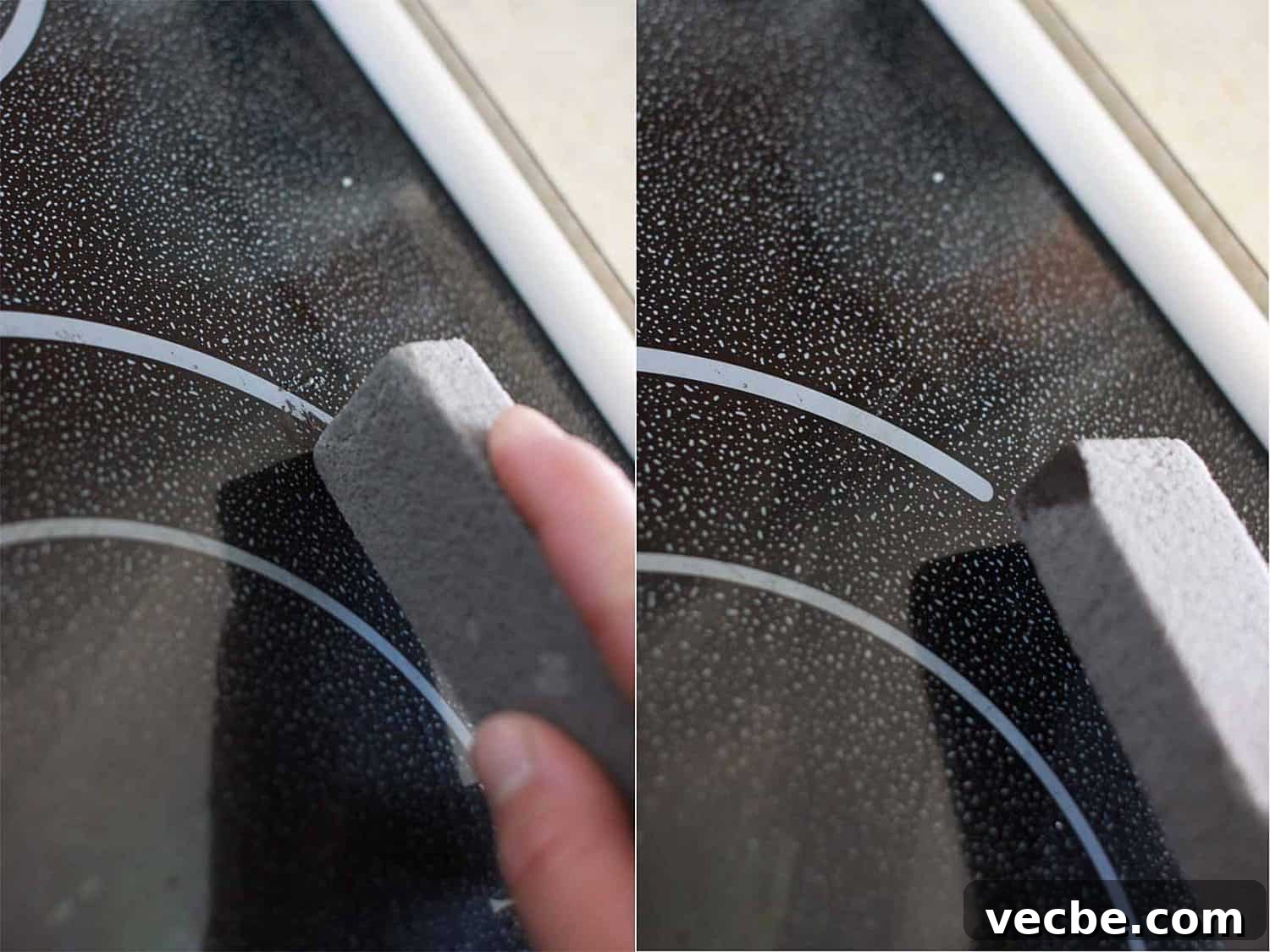
- Scouring stick (pumice) – For very stubborn scorch marks, a pumice scouring stick used lightly will remove residue without scratching when used correctly.
- Scrubby – A regular dish scrubber for mixing and applying the cleaning paste.
- Microfiber cloth – A soft microfiber or lint-free cloth for final buffing and drying to avoid streaks.
These same supplies also work well on white enamel sinks and other hard surfaces that need gentle abrasion and degreasing.
How to deep clean a glass Stove Top
- Remove all pots and pans and wipe away loose crumbs or larger food particles with a damp rag.
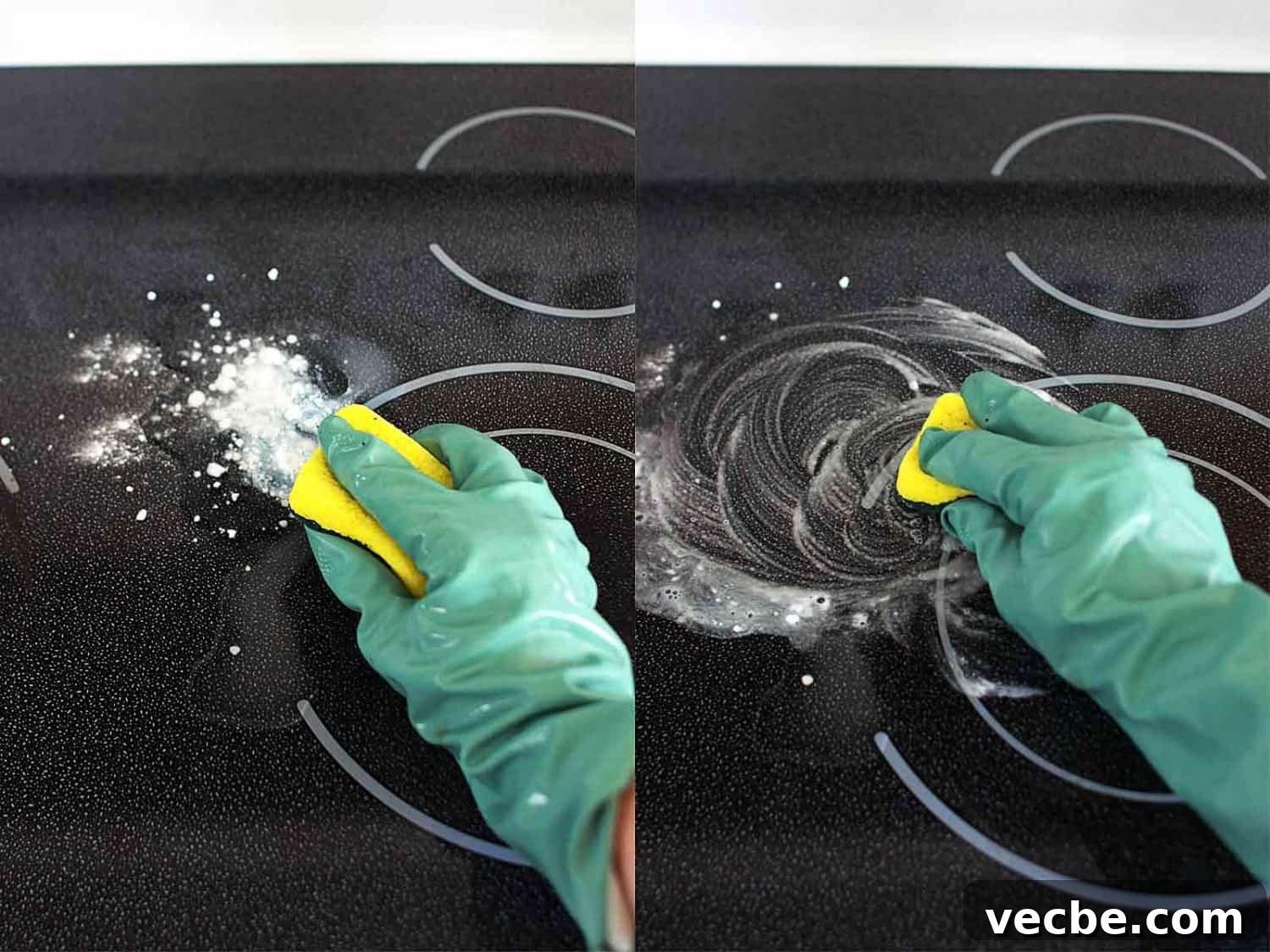
- Sprinkle a couple of tablespoons of Bon Ami powder over the stained areas, add a small squirt of dish soap, and a tablespoon of white distilled vinegar.
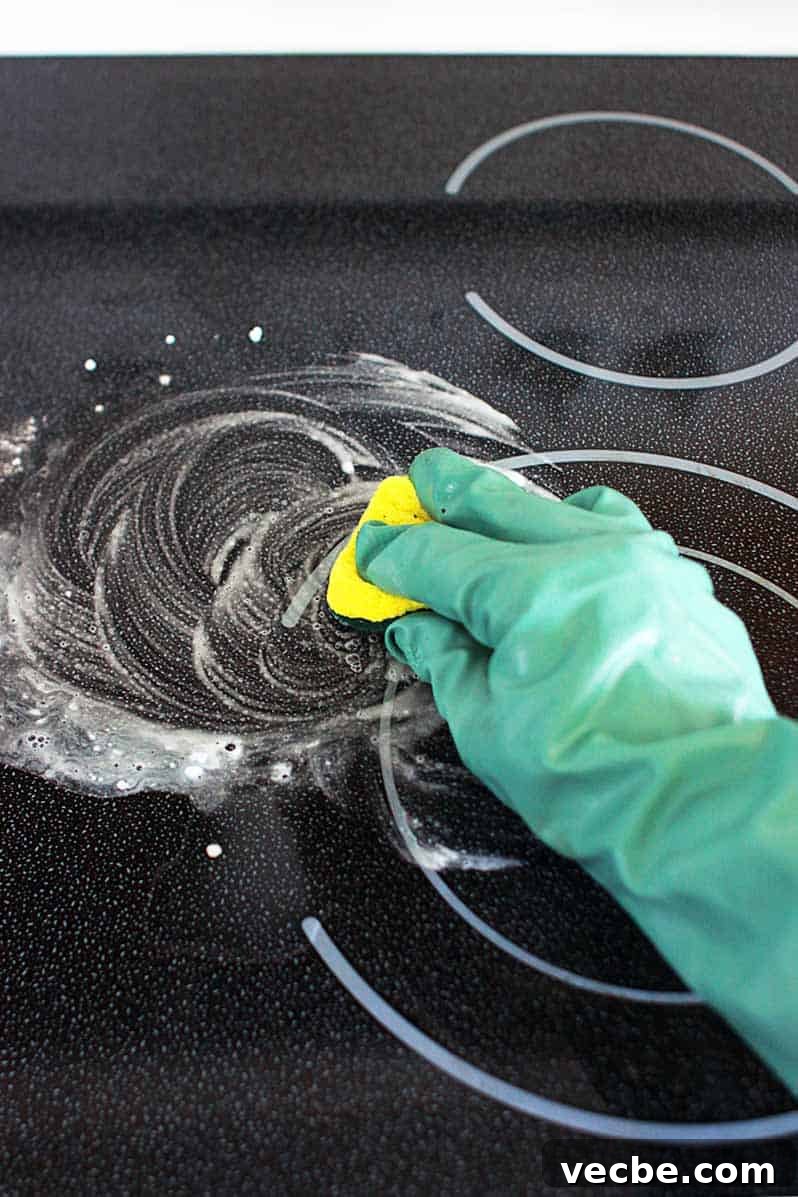
- Put on rubber gloves and use a scrubby to mix the ingredients into a mild paste. Scrub the stovetop using gentle circular motions across the entire surface to lift burned-on residue.
- Wipe away the suds with a clean, damp cloth, rinsing the cloth as needed.
- For remaining stubborn scorch marks, gently work a scouring (pumice) stick over the spot in light circular motions. When used correctly, a pumice stick removes baked-on food without scratching glass cooktops. Stop and wipe frequently to check progress.
- Remove and wash the control dials if they are designed to come off. Clean them in the sink and dry thoroughly before replacing.
- Give the back of the stove a quick wipe with the damp cloth and a drop of dish soap if needed, then rinse and dry the surface.
- Replace the dry dials and buff the entire cooktop with a microfiber cloth for a streak-free shine.
Daily Regular Cleaning of a Glass Cooktop
A quick daily wipe prevents buildup and keeps your cooktop looking clean between deeper cleans. A tidy stove makes cooking more enjoyable and helps your kitchen feel welcoming.
This should only take a minute or two.
- After cooking, remove pots and pans and allow the surface to cool completely.
- Wipe the cooktop with a damp rag; add a few drops of dish soap if grease remains.
- Quickly clean around the control area and knobs, then dry with a microfiber cloth to avoid streaks.
FAQ about cleaning a stained glass stove top
How to clean burnt-on food off a glass stove top without scratching it
Bon Ami powder will remove most burnt residues when combined with dish soap and a little vinegar. For especially stubborn greasy spots, a pumice scouring stick used gently is effective. Always use light pressure and test a small area first, wiping away residue frequently to avoid overworking the surface.
How often should you deep clean your stove top?
A thorough deep clean every 4 to 6 weeks keeps the cooktop in top condition, depending on how frequently you cook. Regular quick wipe-downs after each use help reduce the need for intensive scrubbing later.
Can you use this as a DIY oven cleaner as well?
Yes. The same gentle abrasive paste and careful scrubbing will work on oven glass and interior surfaces. Remove loose debris first and work in small sections, drying and inspecting as you go to avoid damage.
More cleaning tips on the blog
- How to Clean a White Enamel Sink
- How To Clean Carpet With Baking Soda
- Homemade Laundry Stain Remover Spray
- Non-Toxic Glass Cleaner Recipe
- How To Clean Mold In Shower Grout Naturally
Save these steps to try later. Tag @athomeontheprairie on social media to share your results!