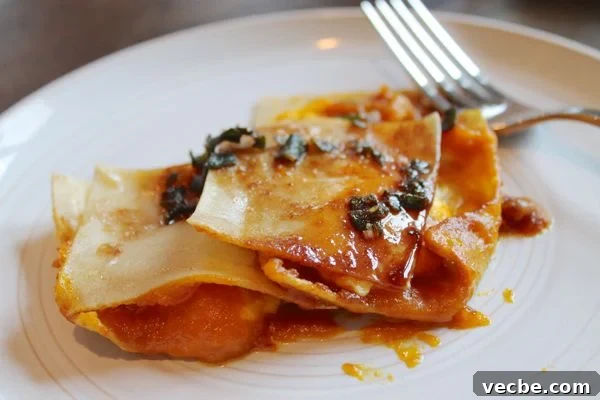
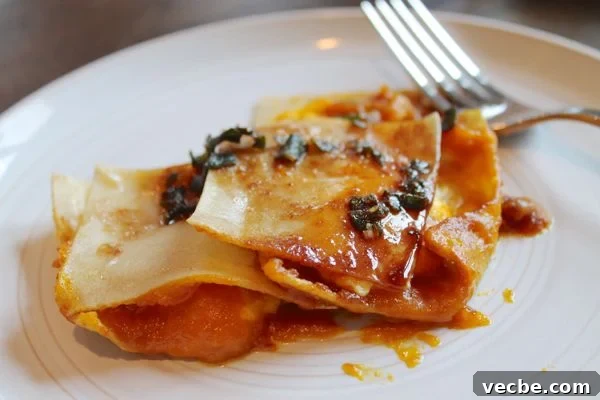
Some meals stay with you long after you’ve eaten them. For me, one of those dishes is the open butternut squash ravioli I first tasted at Apizz in New York City. Tucked away on Eldridge Street in the Lower East Side, Apizz is a small, one-room restaurant centered around a roaring wood-fired oven. The experience felt cozy and romantic, and the modern Italian flavors were memorable enough that I still think about them years later.
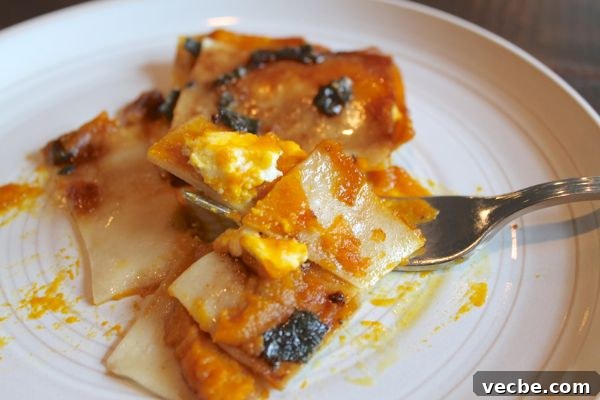
Since flying to New York for one plate of Ravioli con Zucca is impractical, I developed my own version at home. The key characteristic of this preparation is that the ravioli are served “open”: instead of sealing the filling inside a completely enclosed pocket, two pasta squares are layered so the filling sits exposed between them. This technique produces a lighter, more delicate bite than densely sealed ravioli and lets the squash and cheese flavors shine.
Apizz uses butternut squash in their recipe, but I chose kabocha squash because I had some leftover from another project. Kabocha brings a rich, slightly sweet, chestnut-like flavor that works beautifully with ricotta, brown butter, and sage. You can make your own fresh pasta sheets if you have the time and inclination, or use store-bought fresh lasagna sheets to save time. If you want to be fully from-scratch, make your ricotta too, but ready-made ricotta is fine and keeps the process simple.
Serves: 4
Total time: 1 ½ hours (mostly hands-off roasting and assembly)
You will need:
1 cup roasted kabocha squash (mashed)
1 cup ricotta
8 fresh lasagna sheets (or homemade pasta rolled and cut into squares)
4 tablespoons unsalted butter
2 tablespoons brown sugar (optional or to taste)
1 tablespoon fresh sage, chopped (plus a few whole leaves for garnish if desired)
Step 1:
Roast and mash the squash. Roast the kabocha (or butternut) until very tender, then scoop out and mash it smooth. Season lightly with salt and pepper; the ricotta and butter will also add seasoning. Preheat your oven to 350°F (175°C).
Step 2:
Cut the lasagna sheets into roughly 2-inch squares. Bring a pot of salted water to a boil and blanch the pasta squares for about 2 minutes, then drain and lay them out on a clean towel so they don’t stick together.
Step 3:
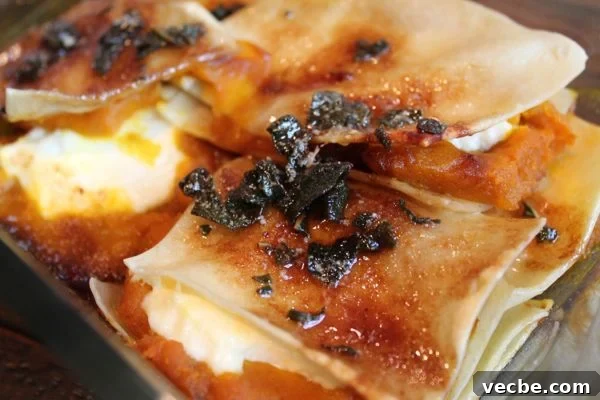
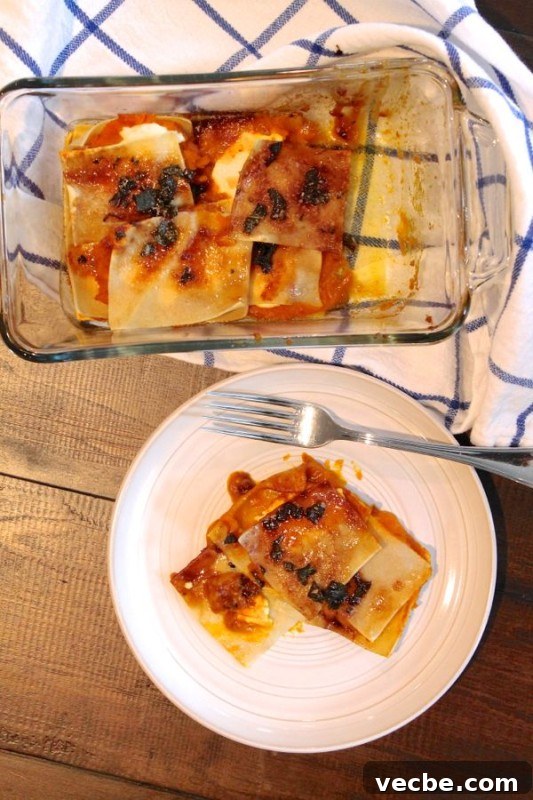
Assemble the open ravioli by spooning about 1 teaspoon mashed squash and 1 teaspoon ricotta onto each pasta square. Top with a second square and press gently to flatten the filling slightly; you want the layers to meet without sealing the edges tightly. Place each assembled piece into a shallow baking dish in a single layer.
Step 4:
Make the brown butter sage sauce: melt the butter in a skillet over medium-low heat and add the chopped sage. Stir frequently as the butter foams and the milk solids begin to turn golden brown. Watch carefully—butter can go from browned to burned quickly. Remove from heat once it smells nutty and the solids are golden.
Step 5:
Pour the brown butter and sage evenly over the open ravioli in the baking dish. If you like a touch of sweetness to contrast the savory components, sprinkle a little brown sugar over the top—use sparingly so it enhances rather than overwhelms the squash.
Step 6:
Bake for 10–15 minutes until everything is hot and lightly bubbling. Finish with a few crisped whole sage leaves or a grinding of black pepper if desired, and serve immediately for best texture and flavor.
Tips and variations: Use butternut if you prefer a milder squash flavor; kabocha is richer and more robust. Fresh pasta sheets make a silkier texture, while store-bought lasagna sheets speed the process. For a nuttier boost, sprinkle toasted hazelnuts or breadcrumbs on top just before serving. Leftovers can be refrigerated in an airtight container for a day or two; reheat gently in a low oven to preserve texture.
This open ravioli preparation highlights the sweet, earthy qualities of roasted squash and the warm, aromatic notes of brown butter and sage. It’s a small-plate-worthy dish that feels refined but is straightforward to prepare at home. If you ever find yourself in New York and want to revisit the origin of the inspiration, the restaurant is named Apizz on Eldridge Street.