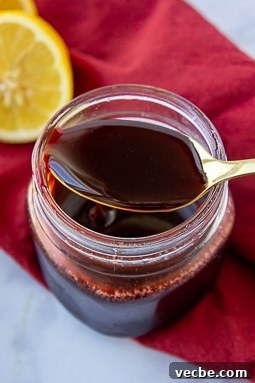
This pomegranate molasses recipe shows how to make a thick, tangy, and sweet homemade syrup from pomegranate juice. Use it as a glaze for vegetables and meats or drizzle it over desserts for a rich, fruity finish.
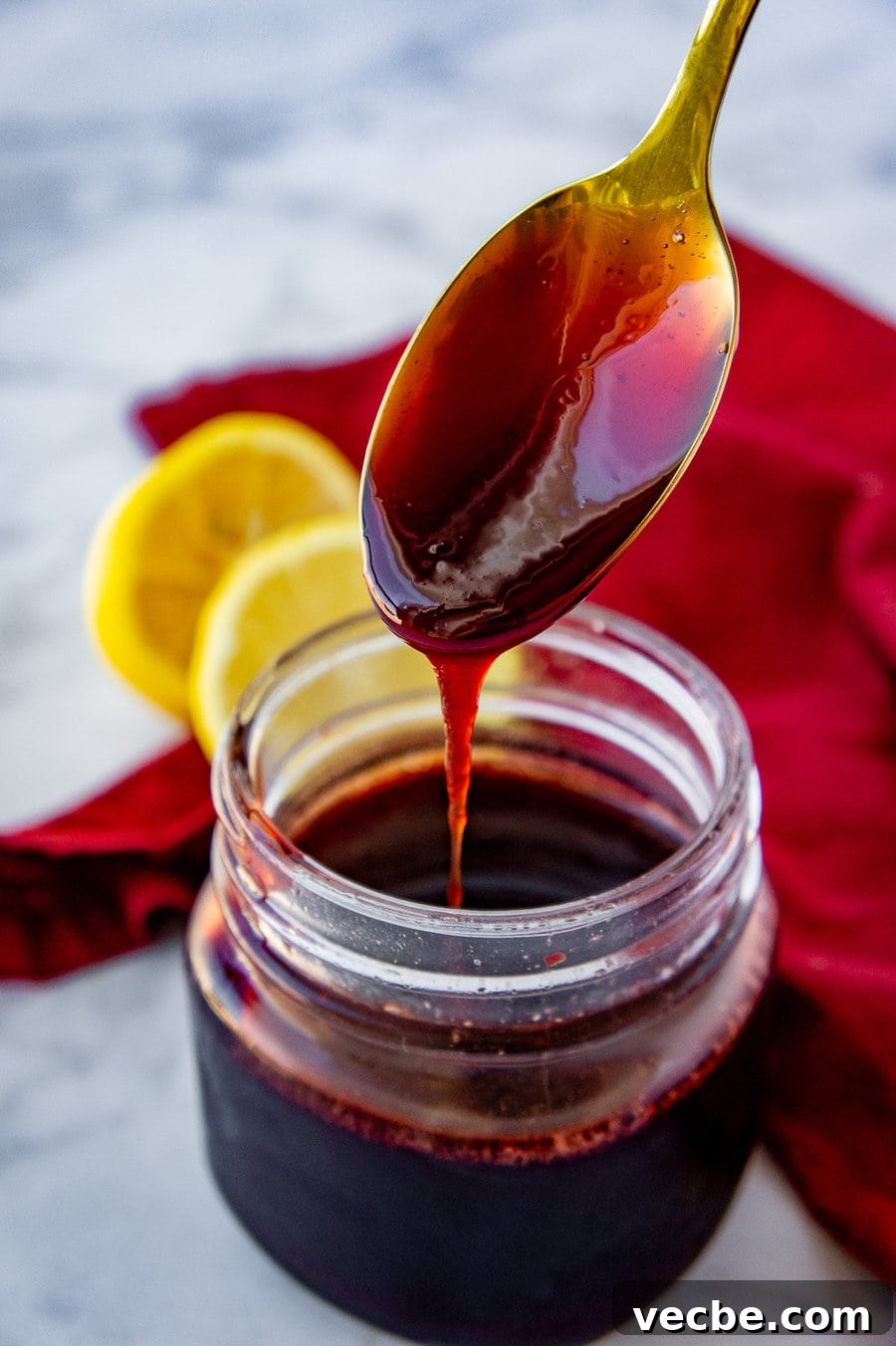
Pomegranates are one of those ingredients that invite creativity. Growing up I harvested buckets of fruit from family trees and learned fast that if I didn’t find ways to preserve the bounty, many of the seeds would go to waste. Over the years I’ve turned them into jams, syrups, and sauces. Homemade pomegranate molasses is a natural next step — concentrated, bold, and versatile.
Pomegranate molasses is a common ingredient in Middle Eastern and Mediterranean cooking. It’s concentrated pomegranate juice cooked down with a bit of sugar and lemon juice to balance the flavor and improve shelf life. The result is a glossy, dark syrup with a sweet-tart profile that brightens savory dishes and complements desserts.
The Difference Between Syrup and Molasses
It’s easy to confuse pomegranate syrup and pomegranate molasses because both begin with the same base: pomegranate juice and sugar. The difference comes down to how much sugar is used and how long the liquid is reduced.
Pomegranate syrup is usually sweeter and cooked just enough to thicken slightly, resulting in a lighter, more pourable liquid. Pomegranate molasses contains less sugar and is reduced further until it becomes thick, dark, and intensely flavored. Both are useful — choose the syrup if you want a lighter touch, and the molasses when you want concentrated tang and depth.
Ingredients
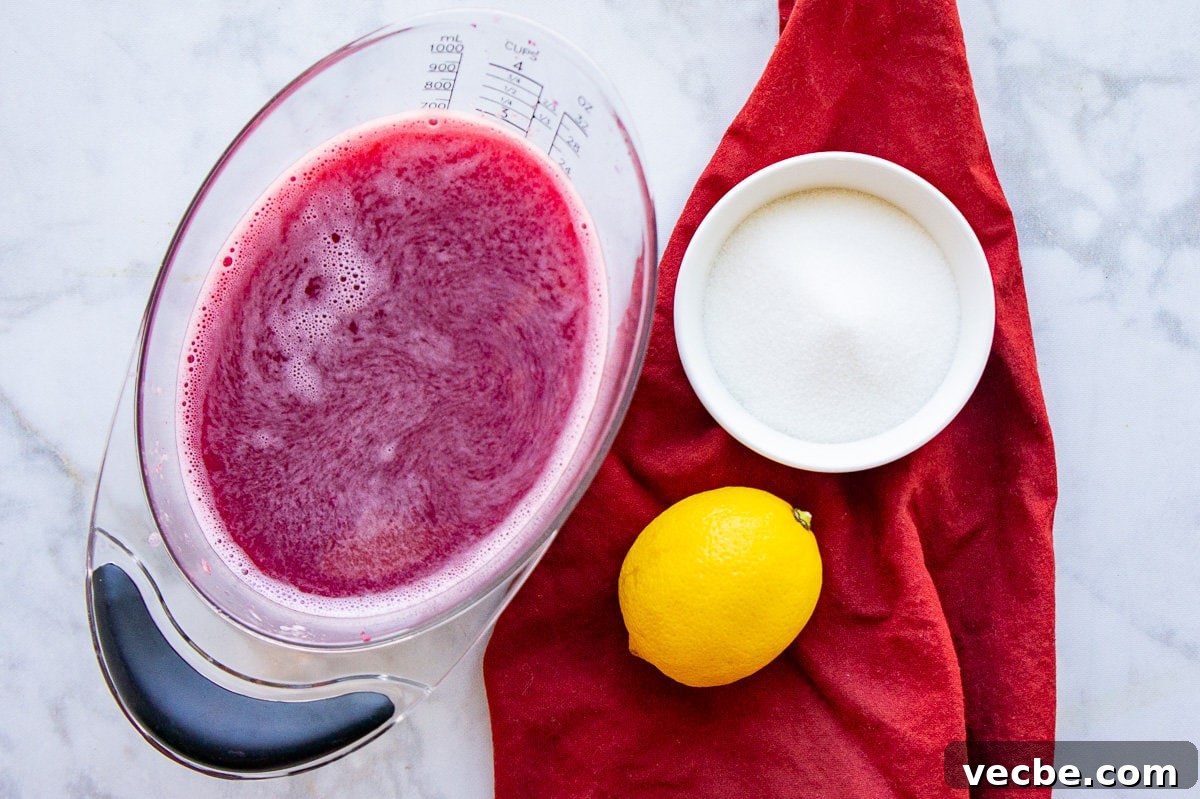
You only need three simple ingredients to make pomegranate molasses at home: pomegranate juice, sugar, and lemon juice. Fresh juice yields the best flavor, but bottled 100% pomegranate juice will also work.
Expect about a half cup of juice per large pomegranate, so plan accordingly if you’re juicing fresh fruit. I use plain granulated white sugar in this recipe; cane sugar works too. If you prefer a sweeter final product, you can increase the sugar, but the balance in this recipe highlights the fruit’s natural tang.
How to Tell When It’s Done Cooking
Making molasses is straightforward: combine the juice, sugar, and lemon juice in a saucepan, bring to a boil, then reduce to a gentle simmer and cook until reduced and thickened. Most of the work is hands-off, but the last stage requires attention because the liquid can go from perfect to overcooked quickly.
Simmer time varies with the amount of juice and the width of your pan, but expect about 45 minutes to an hour. Start watching closely around the 30-minute mark. Here are reliable ways to know when it’s done:
- The bubbling will slow and become thick, viscous, and syrupy rather than rapid and watery.
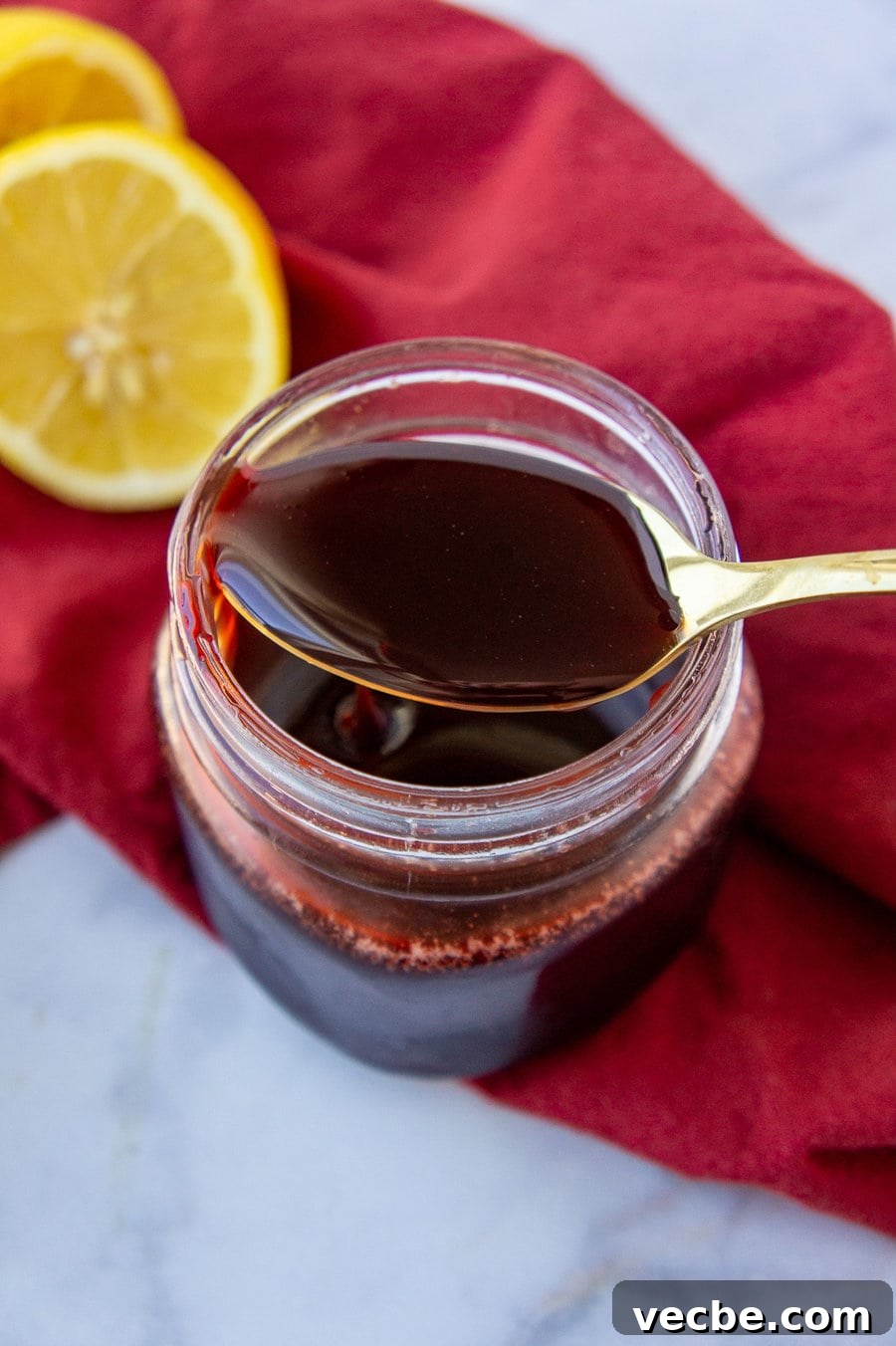
- Chill a spoon in the freezer for a few minutes, then drizzle some of the syrup onto it. It should coat the spoon and flow slowly, similar to honey.
- If you use a candy thermometer, the syrup will reach roughly 220–230°F (about 104–110°C) when concentrated. Be cautious: going beyond that range pushes the syrup into a firm candy stage.
- If you’re uncertain, remove the pot from the heat and transfer a small amount to a dish, chill it, and check the thickness after 10–15 minutes. You can always return the pot to the stove to reduce further, but overcooking is irreversible.
FAQ’s
Store it in a clean jar or airtight container in the refrigerator.
When refrigerated in a sealed container, it keeps for up to about six months.
Use it as a glaze for roasted meats and vegetables, stir it into dressings and marinades for depth and acidity, or drizzle it over cakes, tarts, ice cream, and panna cotta for a fruity finish.
Pomegranates themselves are nutrient-rich, but pomegranate molasses is concentrated and cooked with sugar, so it’s best enjoyed in small amounts as a flavorful accent rather than a primary source of nutrition.
I hope this guide helps you make a batch of pomegranate molasses you’ll want to use again and again. It’s an easy way to preserve seasonal fruit and bring bright, balanced flavor to a wide range of dishes.
Homemade Pomegranate Molasses
Author: Mikayla M.
Yield: About 16 tablespoons
Prep time: 5 mins · Cook time: ~1 hr · Total time: ~1 hr 5 mins
Ingredients
- 750 milliliters (3 cups) pomegranate juice
- 2 tablespoons lemon juice
- 67 grams (1/3 cup) granulated sugar
Instructions
- Combine the pomegranate juice, lemon juice, and sugar in a medium saucepan over medium-high heat.
- Bring to a boil, stirring occasionally to dissolve the sugar.
- Reduce the heat to medium-low and maintain a gentle simmer. Stir every 5–10 minutes for the first 30 minutes to prevent sticking.
- Continue reducing and watch closely for the last 15 minutes. When the liquid is a deep red, viscous, and reduced by about two-thirds, it is done.
- Pour the hot syrup into a clean jar and let it cool completely. Seal and refrigerate; it will keep for up to six months.
Nutrition (per tablespoon)
Calories: 43 kcal · Carbohydrates: 11 g · Protein: 0.1 g · Fat: 0.2 g · Sugar: 10 g · Sodium: 5 mg · Potassium: 108 mg
Share how it turned out — what you served it with and any tweaks you made. Homemade pomegranate molasses is wonderfully adaptable, and small adjustments to sweetness or reduction time will tailor it to your taste.