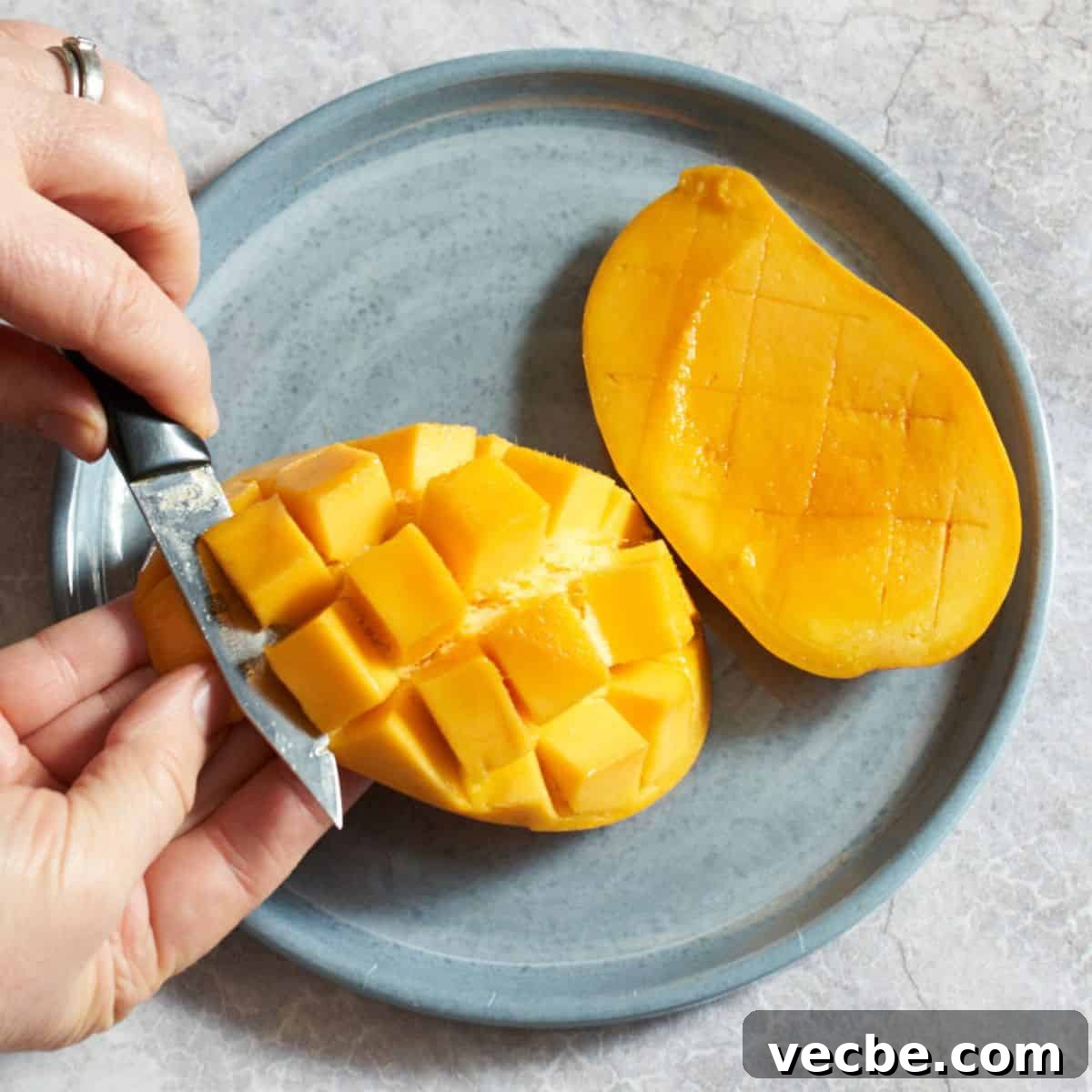
Wondering how to cut a mango? Once you understand the fruit’s basic anatomy, it becomes simple. A mango has a flat, elongated seed in the center with two fleshy “cheeks” on either side and thinner flesh around the seed. Slice the cheeks away from the seed, then cut the flesh into cubes or strips for salads, salsas, smoothies, and desserts.
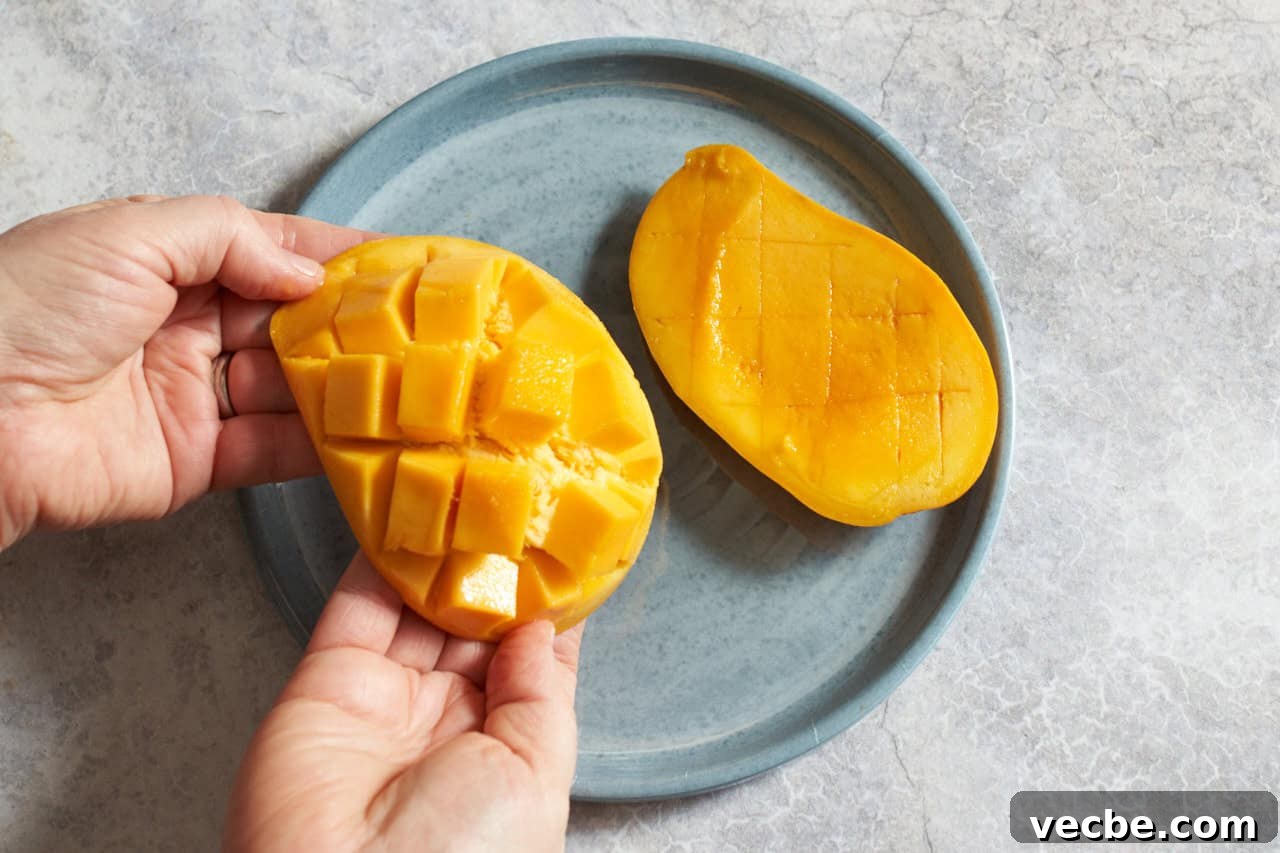
Don’t be intimidated—the basic idea is to make two long vertical cuts just off center to remove the cheeks, then work with one cheek at a time. Below are clear, practical methods for cutting mangoes into cubes and strips, plus tips on handling the flesh around the seed, storage advice, and ideas for sweet and savory recipes.
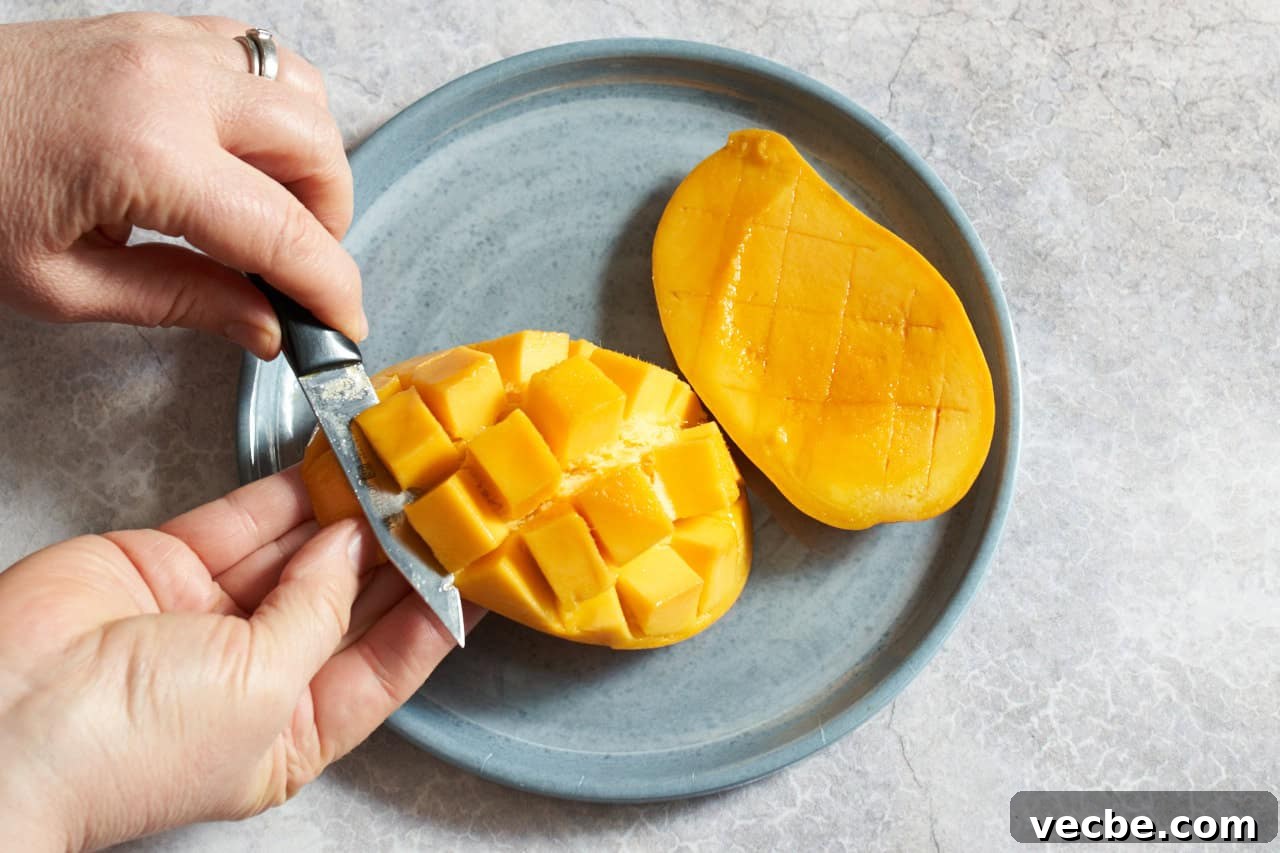
How to cut a mango into cubes
Cubed mango makes a great addition to salsas, salads, yogurt, and desserts. This method gives you neat, bite-sized pieces.
- Place the mango on a cutting board and, using a chef’s knife, slice vertically down each side about 1/4 inch (6–8 mm) off center to avoid the flat seed in the middle. You should end up with two large mango cheeks and a center section that contains the seed.
- Take one mango cheek and use a paring knife to score the flesh in a criss-cross pattern, making parallel cuts about 1/2 inch apart, then rotate and repeat to create a grid. Be careful not to cut through the peel.
- Hold the mango cheek by the peel and push on the skin side so the scored cubes pop outward—this inverts the piece and makes the cubes easy to separate.
- Use a paring knife or a spoon to cut or scoop the cubes away from the skin. Repeat with the other cheek.
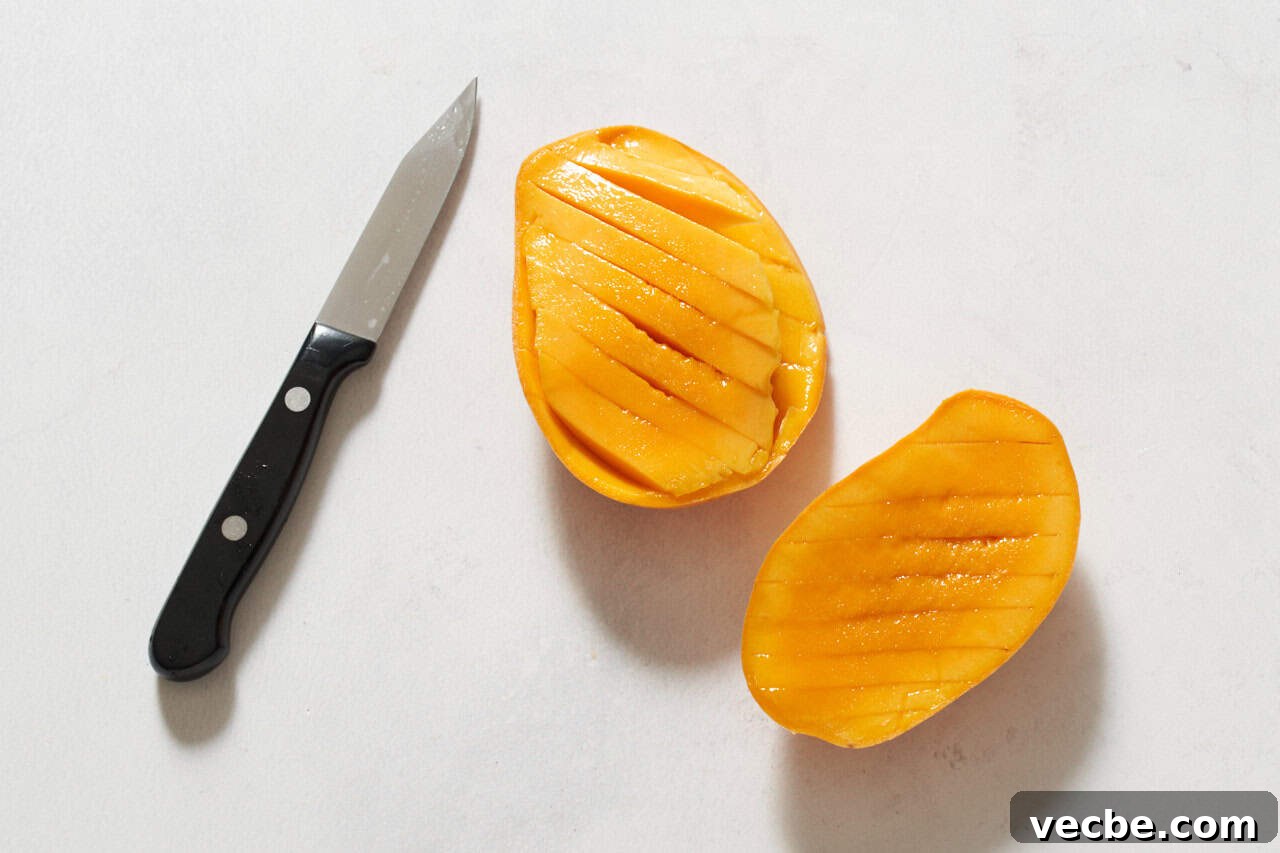
How to cut a mango into strips
Strips are ideal for fruit platters, garnishes, sandwiches, and grilling. This approach yields long, uniform slices.
- With the mango upright, slice off the two cheeks as described above, avoiding the seed.
- Using a paring knife, make long slices through the flesh of each cheek, cutting either vertically (top to bottom) or horizontally depending on the length you want.
- Run the paring knife along the inside edge of the peel to separate the slices, then bend the peel back slightly or use a spoon to lift the strips out cleanly.
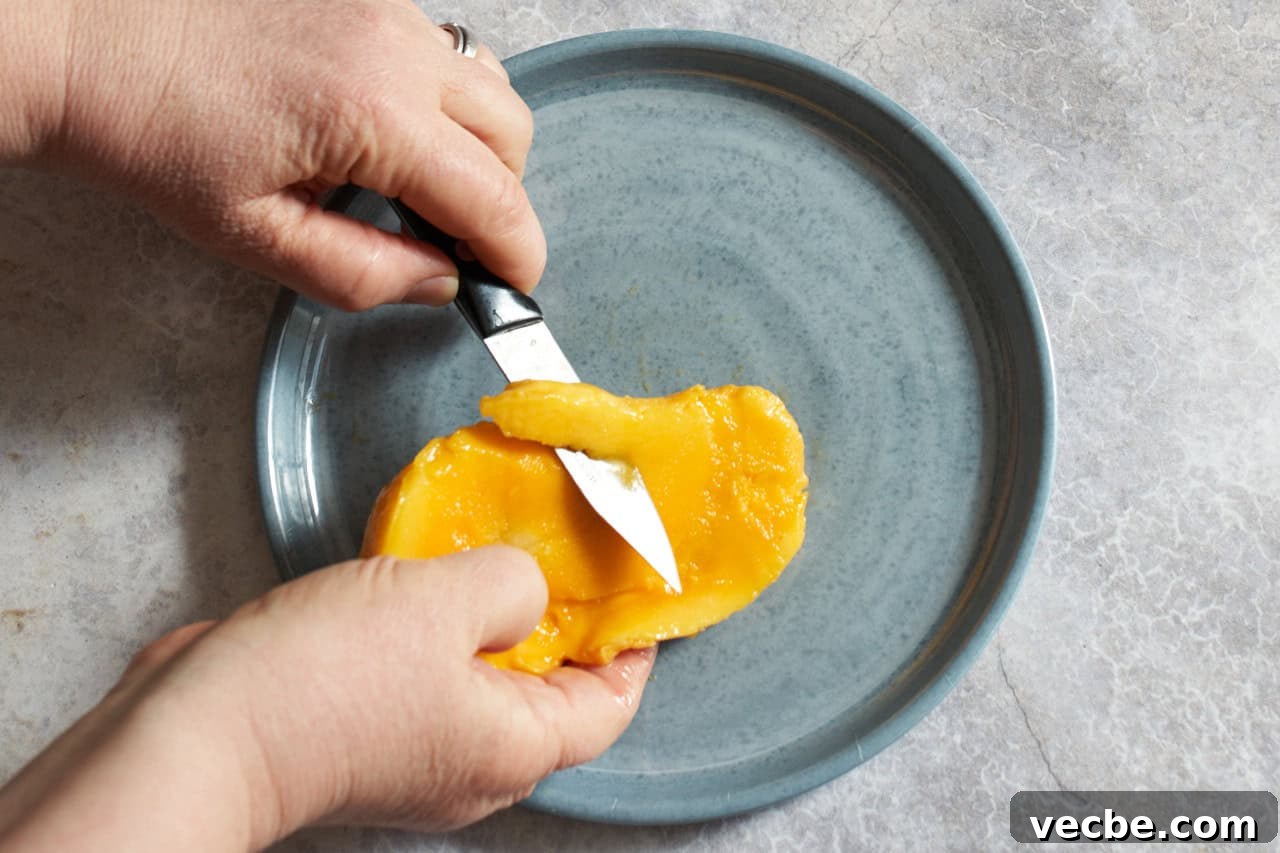
Don’t leave the fruit around the seed behind
A surprising amount of good mango flesh sticks to the seed. You can recover most of it with a careful approach.
- Remove any remaining peel from the center section that contains the seed.
- Hold the seed so the narrow edge faces up, then use a small, sharp knife to slice the flesh away from both broad sides of the seed. Work slowly—the seed is firm and the remaining flesh is often irregular in shape, but it is perfectly usable for smoothies, chutneys, or snacking.
How to choose and store mangoes
- Choose mangoes that yield slightly to gentle pressure—a bit like a peach or avocado. Aroma at the stem end can also indicate ripeness.
- Keep unripe mangoes at room temperature until they give slightly when pressed. Once ripe, move them to the refrigerator to slow further ripening; ripe mangoes typically keep in the fridge for several days.
- If you have more ripe mango than you can use, cut it into cubes, spread the pieces in a single layer on a baking sheet, freeze until solid, then transfer to a sealed container or freezer bag. Frozen mango keeps well for up to about six months and is perfect for smoothies, sorbets, or frozen mango margaritas.
Sweet recipes with mango
- Mango Upside Down Cake with Lime and Ginger
- No-Bake Mango Cheesecake
- Eggless Mango Mousse without Gelatin
Savory recipes with mango
- Fresh Mango Habanero Salsa
- Mango Slaw
- Mango Avocado Salsa
- Mango Corn Salad with Avocado and Lime Dressing
- Chicken and Mango Curry with Coconut Milk