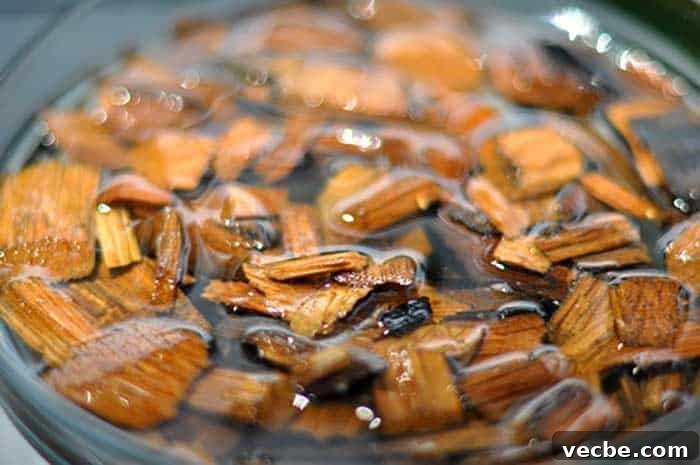
Why you should stop soaking wood chips for smoking. Everything you need to know about water absorption, smoldering, heat-up time, and practical tips for better smoke.
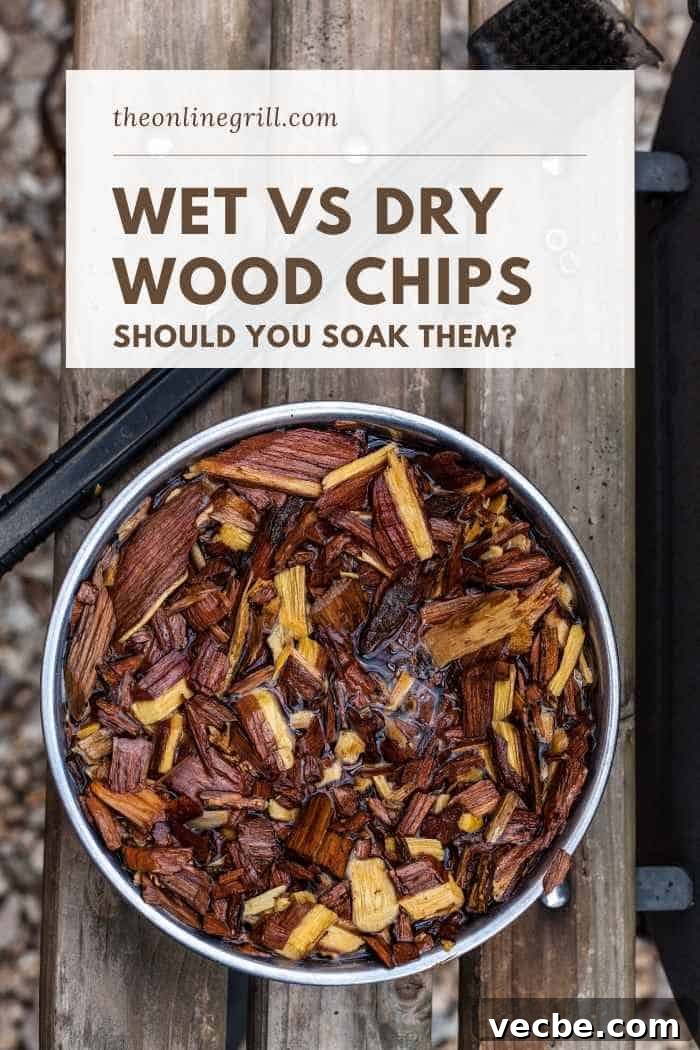
- Wood chunks don’t absorb much water
- Water interferes with smoldering
- Soaked chips can interfere with charcoal smoking
- Soaked chips don’t heat up faster
- Does soaking wood chips have any benefits?
Wood chips are a core tool for smoking—delivering flavor, aroma, and the visual cue of real smoke. Still, whether you should soak them before using remains one of the most stubborn myths in BBQ. Traditional advice encourages soaking chips in water to slow down burning and lengthen smoke time. But that approach often produces poor results and can interfere with how and when wood actually produces smoke.
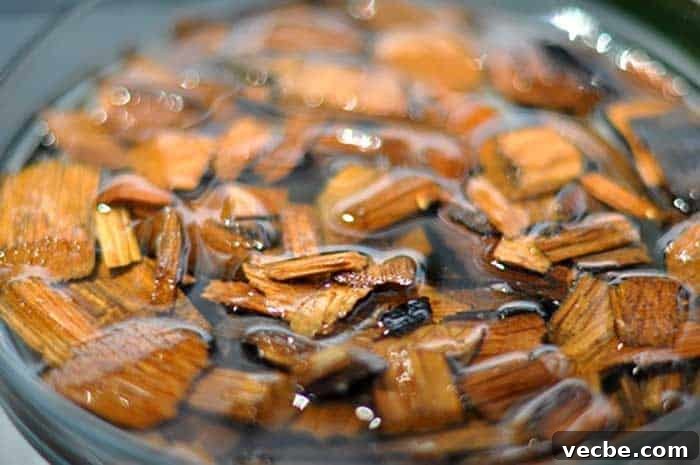
Whether you’re new to smoking or have years behind the pit, understanding the science and practical effects of wet versus dry wood will improve your smoking results. Below are clear reasons to stop soaking wood chips and to use dry wood chunks or properly managed chips instead.
Wood chunks don’t absorb much water
Large pieces of hardwood—logs or chunks—are surprisingly resistant to water penetration. Controlled experiments that soaked whole chunks in colored water for extended periods show only surface wetting and moisture in existing cracks. The bulk of the wood remains dry even after long exposures.
Wood chips, because of their thin, exposed surfaces, do take on more water than thick chunks. But the typical 30–120 minute soak commonly recommended still achieves very little internal saturation in most hardwoods. Essentially, soaking chunks to “soak up” water deep inside is not realistic; the water tends to stay near the surface or in fractures.
Water interferes with smoldering
When wet wood is placed on heat, the first thing that happens is evaporation. Water must be driven off at or below 212°F (100°C) before the wood can reach temperatures where it begins to smolder and produce flavorful smoke. While the wood is steaming, it is not smoking.
This means soaking does not extend smoke time in the way many assume. Instead, soaked wood spends its initial time turning water into steam. That delays the onset of smoke and can reduce the efficiency and flavor quality of the smoldering phase.
Soaked chips can interfere with charcoal smoking
If you add wet wood to a charcoal fire, the evaporating water removes heat from the coals and can momentarily lower temperatures. Effective smoking relies on steady temperature control; anything that cools or smothers the coals makes it harder to maintain even heat and consistent smoke production.
For charcoal cookers, putting soaking-wet chips or chunks directly on the coals risks smothering sections of the fire and disrupting your temperature plan. Dry wood, or chips managed in a controlled way, keeps the fire stable and predictable.
Soaked chips don’t heat up faster
One common reason people soak chips is to make them last longer on the heat. In practice, soaking delays smoke production but does not make chips “last” in a useful way. A better approach is to use dry chips in a small foil packet with holes punched in it, or to use a smoker box or tray designed to hold chips. These methods control burn rate and keep the smoke thin and flavorful without adding excess moisture.
Does soaking wood chips have any benefits?
There are a few limited situations where adding moisture to wood makes sense. Soaking wide, thin cedar planks before direct grilling is a common practice to reduce the chance of the plank catching fire. For thin planks used to grill delicate items, brief soaking can help the plank last long enough to infuse flavor without igniting.
For chips and chunks intended to smolder, however, soaking has drawbacks. You’re trading immediate, flavorful smoke for delayed steam and reduced coal temperature control. If your goal is a clean, consistent smoke—thin, blue, and nearly invisible—dry wood or controlled chip delivery methods are usually the better choice.
Ultimately, the small effort of tossing dry chips into a foil pouch or smoker box, or choosing larger dry chunks for longer smolder, gives better results than soaking. It eliminates the wasted time and oxygen used to evaporate water and produces more usable, flavorful smoke. For most home smokers and pitmasters, skipping the soak is a simple change that improves both flavor and temperature control.